
Tsuruga Castle
Culture · Aizuwakamatsu · Fukushima · Japan

About this place
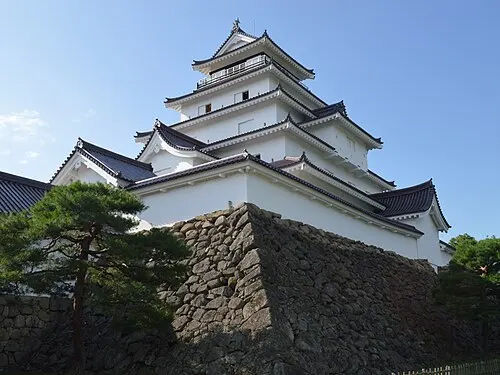
Tsuruga Castle is a cherished symbol of Aizu-Wakamatsu.
Tsuruga Castle is a cherished symbol of Aizu-Wakamatsu. The castle’s name comes from its resemblance to a crane (tsuru), as the white walls and red-tiled roof evoke the bird’s white feathers and red crown. Today, the castle and surrounding Tsuruga Castle Park are Aizu-Wakamatsu’s top tourist attractions. The park is a spacious oasis of plantings, lawns, and flowers, including many cherry trees.
The earliest castle on this site was built by the warlord Ashina Naomori (1323–1391) and was originally called Kurokawa Castle. The rulers of Aizu changed frequently over the centuries and the castle underwent various transformations. After he took control in 1590, Gamo Ujisato (1556–1595) had the castle rebuilt with an ambitious seven-story design for the main keep and renamed it Tsuruga Castle. Following damage from an earthquake, Lord Kato Yoshiaki (1563–1631) later replaced the keep with a five-story version surrounded by high walls and a moat.
Although considered one of the strongest castles of its time, it was later badly damaged in the Battle of Aizu in 1868. The emperor’s army surrounded the castle and battered it with their guns and cannons, forcing the Aizu to surrender. The Meiji Restoration (1868) ended the age of the samurai, and Tsuruga Castle was seen as a relic of the past by the new government. In 1874, the castle was largely demolished—a fate met by many Japanese castles of the day. Only the original stone walls were left standing.
This English-language text was created by the Japan Tourism Agency.