
Mt. Bōjū
房住山
Nature · Akita area · Akita · Japan

About this place
For centuries, Mt. Bōjū (409 m) was a site of Buddhist worship and mountain asceticism.
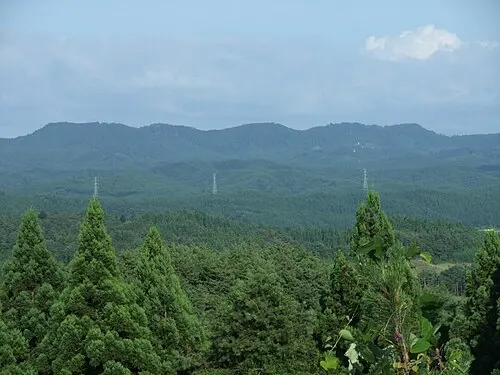
For centuries, Mt. Bōjū (409 m) was a site of Buddhist worship and mountain asceticism. Today, this unspoiled woodland is known for its hiking trail lined with 33 statues of Kannon, the bodhisattva of compassion. Mt. Bōjū’s name means “the mountain where monks live,” reflecting the presence of Buddhist monks who once made Mt. Bōjū their home.
The most famous story of the mountain tells the fate of the Nagatsura brothers, who fought Sakanoue no Tamuramaro (758–811), a general later known for subduing the Emishi people to the northeast. Two of the three brothers, who were said to have extraordinarily long faces, died fighting against Tamuramaro’s forces, but the eldest brother escaped to Mt. Bōjū. When Tamuramaro prayed for help in finding the escapee, he heard a thunderous voice from the mountains—the remaining sibling, wailing for the loss of his brothers. The eldest brother’s cries were so loud that they destroyed the mountain’s temple, crushing him beneath it.
The 33 statues of Kannon that punctuate the mountain’s trail were dedicated by local residents in 1860. Kannon is depicted in Buddhist sutras as having 33 forms, and Japan has many routes that connect 33 images or statues of Kannon. It is believed that making offerings at each of the 33 sites along the route will grant a special boon. Some of the best-known examples, such as the Saikoku 33-Kannon Pilgrimage, are hundreds of kilometers long and span multiple prefectures. These routes, often referred to as “pilgrimage routes,” are believed to have first appeared in the Nara period (710–794). Their popularity grew in subsequent centuries, and shorter, more accessible versions of the routes were created that could be completed in just a few hours, or even a few minutes. The 33 statues on Mt. Bōjū are one example of this adaptation.
This English-language text was created by the Japan Tourism Agency.