
Enokisha Shrine
榎社
Culture · Dazaifu · Fukuoka · Japan

About this place
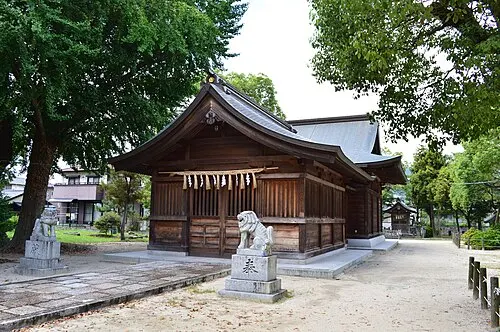
Enokisha Shrine stands on the site where Sugawara Michizane (845–903) lived his final two years.
Enokisha Shrine stands on the site where Sugawara Michizane (845–903) lived his final two years. Michizane was a celebrated poet and administrator who was later deified as Tenjin, the Shinto deity of learning, culture, and the arts. He is enshrined at Dazaifu Tenmangū Shrine, which was erected over his grave. Every year, a grand procession escorts Tenjin from Dazaifu Tenmangū’s main sanctuary to Enokisha for a visit. This late-September festival, called the Jinkō Event (jinkōshiki), is Dazaifu Tenmangū’s most important annual ritual. Tenjin is carried inside an ornate portable shrine called a mikoshi, and hundreds of participants clothed in Heian-period (794–late 12th century) attire accompany him on the three-hour procession to Enokisha.
In Michizane’s day, the site was occupied by the Nankan, a run-down residence for government officials. Despite Dazaifu’s relative importance as a center of trade, it was very far from the imperial capital and positions of political influence such as Michizane had previously held. When jealous rivals caused him to lose favor with the emperor, Michizane was demoted and exiled to Dazaifu, where he lived in hardship. In a collection of poems completed in 903, Michizane expresses the emptiness of his new life: confined to his residence, he can see nothing but the roof tiles of other government offices, and hear nothing but the tolling of a temple bell. However, legend tells that in the midst of his misery, an elderly woman named Jōmyōni showed him compassion by bringing mochi rice cakes skewered on the branches of a plum tree. Because of her kindness, a small shrine (hokora) dedicated to Jōmyōni stands behind Enokisha’s main hall. Part of the purpose of the Jinkō Event is for Tenjin to visit her spirit and express his gratitude.
This English-language text was created by the Japan Tourism Agency.