
Mt. Azuma-Kofuji
吾妻小富士
Nature · Fukushima area · Fukushima · Japan

About this place
Millennia of volcanic activity has shaped the rugged landscape of the Azuma mountain range in Bandai-Asahi National Park, creating peaks like Mt. Azuma-Kofuji (1,707 m).
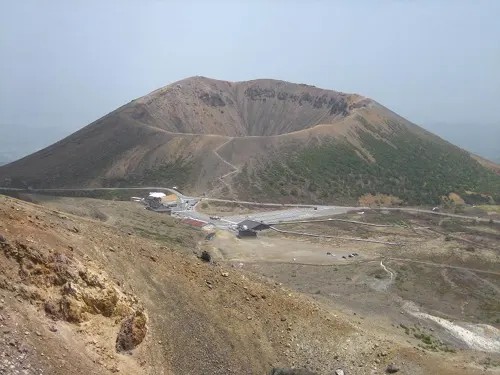
Millennia of volcanic activity has shaped the rugged landscape of the Azuma mountain range in Bandai-Asahi National Park, creating peaks like Mt. Azuma-Kofuji (1,707 m). The mountain formed over 1,500 years when successive violent eruptions caused lava flows, volcanic ash, and pyroclastic fragments to build up around the sides of a volcanic vent. The conical shape of the peak and its symmetrically sloping sides draw comparisons to Mt. Fuji—Kofuji means “Little Fuji.” It is a relatively young volcano (approximately 6,000 years old) but has remained dormant for a very long time, with only a slight chance of eruption in the future.
The slopes of Mt. Azuma-Kofuji appear desolate, covered mainly with loose sand, gravel, and scoria (volcanic rock). The conditions are not ideal for plant life, but some hardy species are able to survive in the dry soil. While hiking, visitors may notice lichen and moss growing on large rocks, and plants such as knotweed and wavy hairgrass. Native white pines grow at the southern foot of the mountain and are slowly spreading up its slopes, a sign of ecological succession (the gradual return of plant life after a volcanic eruption).
This English-language text was created by the Japan Tourism Agency.