
Mt. Bandai
磐梯山
Nature · Fukushima area · Fukushima · Japan

About this place
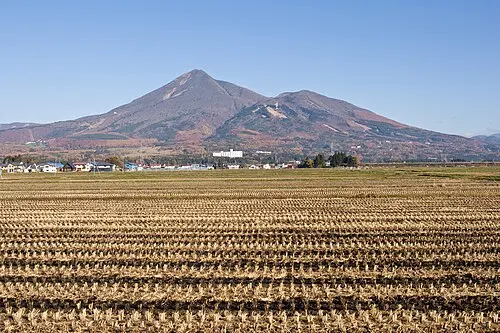
Mt. Bandai is a 1,816-meter stratovolcano, a volcano built up of layers of lava and ash, that has been dramatically reshaped by two large eruptions.
Around 2,500 years ago, Mt. Bandai was symmetrical, but volcanic activity caused the peak to collapse in on itself, creating the Numanodaira Caldera.
In 1888 it erupted again in a devastating steam-blast eruption, an explosion that occurs when water beneath the ground or on the surface is heated by magma or lava. No lava was discharged, but it was powerful enough to cause the collapse of one of the volcano’s four peaks, Ko Bandai (around 1,800 meters, on the north side of the mountain), and triggered a large-scale landslide.
The landslide destroyed 11 communities and entirely reshaped the north side of the mountain, known today as Urabandai. The landslide that followed destroyed entire villages and dammed up valleys, forming around 300 lakes and ponds. Today, their beauty is a major attraction in Bandai-Asahi National Park.
This English-language text was created by the Japan Tourism Agency.