
Hakone Shrine
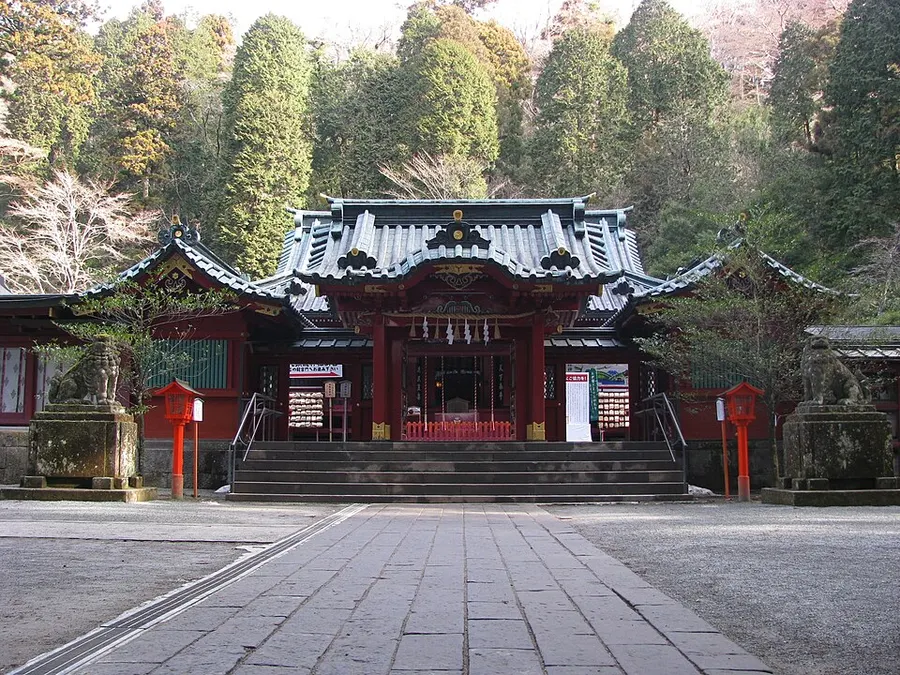
平和の鳥居、本殿など
Culture · Hakone · Kanagawa · Japan

About this place
If Lake Ashi is the natural symbol of Hakone, then Hakone Shrine is its spiritual hub.
If Lake Ashi is the natural symbol of Hakone, then Hakone Shrine is its spiritual hub. According to legend, this Shinto shrine was founded in 757 CE by Mangan Shonin, a priest engaged in ascetic practices who is said to have erected a simple lakeside sanctuary to the deities of the nearby mountains that had been worshiped in this region since antiquity. The shrine’s influence grew during the Kamakura period (1185–1333), after Minamoto no Yoritomo (1147–1199) sought refuge there after defeat in his first battle against the ruling Taira family. Yoritomo eventually vanquished the Taira and established the Kamakura shogunate, which was to last for almost 150 years.
Not one to forget how Hakone Shrine had provided refuge in time of need, Yoritomo and his successors continued to make regular pilgrimages there, inspiring their retainers to follow suit. By the time the Edo period began in 1603, the shrine’s power had grown considerably, and when the new Tokugawa shogunate sought to establish a checkpoint along the Tokaido highway passing quite close to the shrine precincts, the priests were able to effectively resist the plan. Ultimately the barrier was built a significant distance further down the road. Popular belief in the powers of the shrine remained strong through the late Edo period (late eighteenth century to 1867), when a change in official policy allowed people traveling along the Tokaido highway between Edo (present-day Tokyo) and Kyoto to part from the road for one night only, making it possible to offer prayers at the shrine on their way.
This English-language text was created by the Japan Tourism Agency.