
Joruriji Temple
浄瑠璃寺
Culture · Kizugawa · Kyoto · Japan

About this place
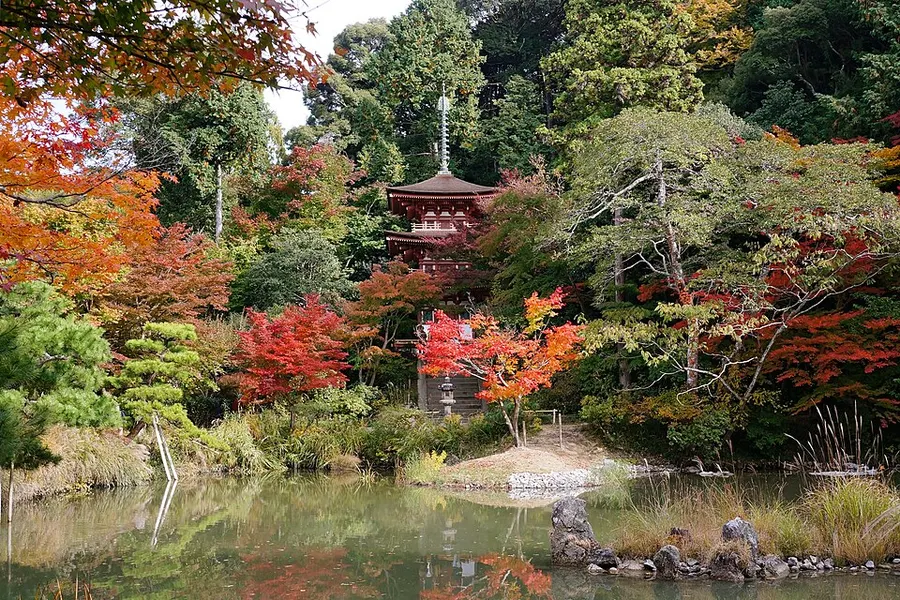
The Joruriji Temple grounds were designed in the style of a Jodo Garden, or Pure Land Garden, in the Heian period (794–1185).
The Joruriji Temple grounds were designed in the style of a Jodo Garden, or Pure Land Garden, in the Heian period (794–1185). A Jodo Garden design attempts to replicate the Pure Land on earth and calls to mind Buddhist notions of conscientious living. Accordingly, Joruriji Temple’s Three-Storied Pagoda stands in the east where the sun rises (symbolizing birth), and its Main Hall is in the west where the sun sets (symbolizing death), facing each other over a central pond that represents the ocean between this life and the world beyond. The pond also serves as a symbol of Amida’s paradise. Both the Main Hall and the Three-Storied Pagoda are National Treasures of Japan. Joruriji Temple is also sometimes referred to as Kutaiji Temple (“the temple of the nine statues”) in reference to the group of nine Amida Nyorai statues enshrined in its Main Hall.
Located in the city of Kizugawa, Kyoto, Joruriji Temple is believed to have been founded during the eighth century as a place for monks to train and study, though the exact date is unknown. Records state that the first Main Hall was built in 1047 and that a small, carved wooden statue of Yakushi Nyorai (the Medicine Buddha) was enshrined here as the principal deity. This is believed to be the same Yakushi Nyorai that is enshrined at the temple at present. In 1107, the nine wooden statues of Amida Nyorai were enshrined at Joruriji Temple, among other Buddhist statues.
This English-language text was created by the Japan Tourism Agency.