
Kaijusenji Temple
海住山寺
Culture · Kizugawa · Kyoto · Japan

About this place
According to the temple legend, Kaijusenji was built northeast of the city center, a direction traditionally occupied by the kimon, or demon gate.
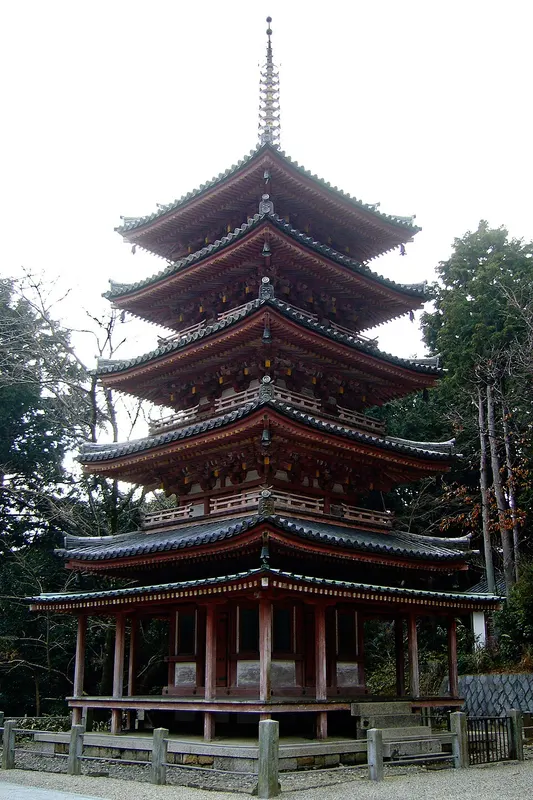
Kaijusenji Temple is located half-way up Mount Sanjoyama, overlooking the city below with a view that takes in renowned sites like Mikanohara (an area along the river in present-day Kizugawa City), the Kunikyo Ruins (an old imperial palace), and the Kizu River (the heart of the Minami Yamashiro area). In 740, the Japanese emperor ordered the national capital to be moved to Mikanohara. According to the temple legend, Kaijusenji was built northeast of the city center, a direction traditionally occupied by the kimon, or demon gate. The kimon is located in the northeast because it is believed that this is the direction from which demons come and go, and thus is a source of bad luck. Kaijusenji Temple is believed to have been placed there to pray for the safe construction of the new capital and of Todaiji Temple’s great Buddha statue. Today, however, Kaijusenji Temple is known for its view of the lower valley as well as its Five-storied Pagoda, which is a National Treasure.
In 740, Emperor Shomu (701–756) moved the capital to the Mikanohara area. Kunikyo, as this capital was called, functioned as the center of the state until 744. In order for the capital to be protected from evil spirits, many temples were built in this area. Kaijusenji is one such temple, built on the slopes of Mount Sanjoyama. According to Onmyodo (The Way of Yin and Yang), a traditional Japanese esoteric cosmology based on philosophies introduced from China in the sixth century, the northeast is an unlucky direction associated with misfortune known as kimon, or demon gate.
This English-language text was created by the Japan Tourism Agency.