
Kanimanji Temple
蟹満寺
Culture · Kizugawa · Kyoto · Japan
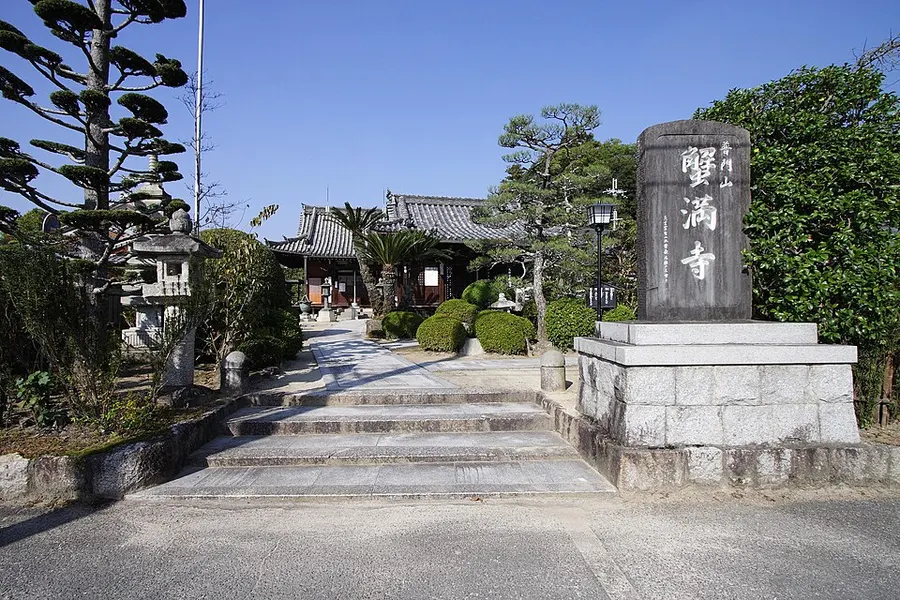

About this place
Kanimanji celebrates its connections to this tale with its crab emblem.
Kanimanji Temple gained its fame from being mentioned in Konjaku Monogatari (“Tales of Times Now Past”), a famous collection of tales from India, China, and Japan compiled during the late Heian period (794–1185). In one tale, a young girl devoted to Kannon, the Buddhist avatar of mercy, saves a crab from being tormented by another villager. Later on, Kannon takes the shape of a crab to save the girl from a terrible fate. The girl and her father, in honor and gratitude, build a temple to enshrine the crab. Kanimanji celebrates its connections to this tale with its crab emblem. Also, its annual crab-releasing festival on April 18 is another way to continue passing down the story. Its principal deity, a massive 2.2-ton gilt bronze Shaka Nyorai statue, is also a National Treasure of Japan.
The historical origins of Kanimanji Temple are unclear. The current temple is a modest one, with only one main hall, but recent excavations revealed the remains of a temple much grander in scale that used to stand here over 1,300 years ago. It is believed that this prior structure is the original temple, and judging from its size, the temple was probably established by either national edict or a powerful local clan. As seen in many older texts, the original name of the temple was “Kabata-tera,” and several theories exist regarding the etymology of its current name. Some say it is because the patron clan was skilled at textile production, especially of kabata, a type of silk fabric. Others say the name was a reference to cloth offered to the gods at the temple, also called kabata. Although it is believed that Kanimanji Temple was once very prosperous and influential, fires and periods of disuse throughout the years caused the temple to decrease in size.
This English-language text was created by the Japan Tourism Agency.