
Omido Kannonji Temple
大御堂観音寺
Culture · Kyotanabe · Kyoto · Japan

About this place
Omido Kannonji Temple is believed to have been established over 1,300 years ago by an imperial edict.
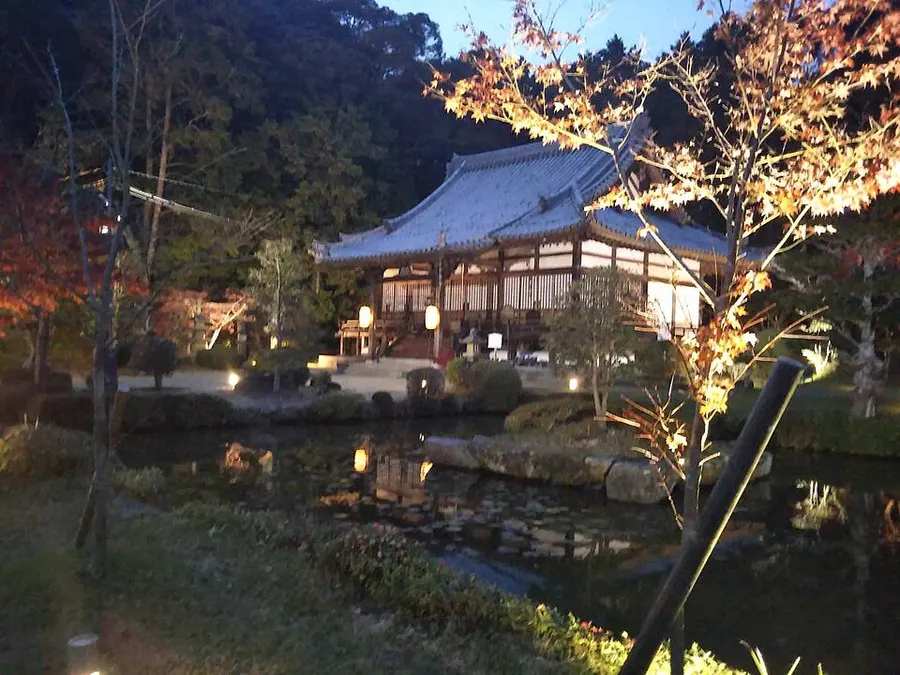
Omido Kannonji Temple is believed to have been established over 1,300 years ago by an imperial edict. At its height, it was highly prosperous with thirty-three grand temple structures. Today, Omido Kanonji Temple is a fraction of its past size and has only a main hall. It is known for its principal deity, an Eleven-Headed Kannon Bodhisattva that is one of only seven recognized as National Treasures in Japan. Flanked on all sides by nature, Kannonji Temple’s surroundings are considered particularly beautiful, with a line of cherry blossom trees and yellow flowers that bloom in the spring, and stunning fall foliage.
In the eighth century, Omido Kannonji Temple was highly prosperous, having expanded to thirty-three structures. In 744, the statue of the Eleven-Faced Kannon was enshrined here as the principal deity. Over the centuries, the temple suffered fire damage on multiple occasions, but was always rebuilt by members of the Fujiwara clan, a powerful family that dominated the politics during the Nara (710–794) and Heian (794–1185) periods. A fire in 1437, however, razed all thirteen halls and twenty priest quarters, and only the Main Hall was later rebuilt. Today, all that remains from the original Omido Kannonji Temple’s is a cornerstone, thought to be the remnant of a five-storied pagoda. The temple never regained its former size. The current main hall was last rebuilt in 1953.
This English-language text was created by the Japan Tourism Agency.