
Hachimangu Shrine
八幡宮社
Culture · Nishikyo-ku, Kyoto · Kyoto · Japan

About this place
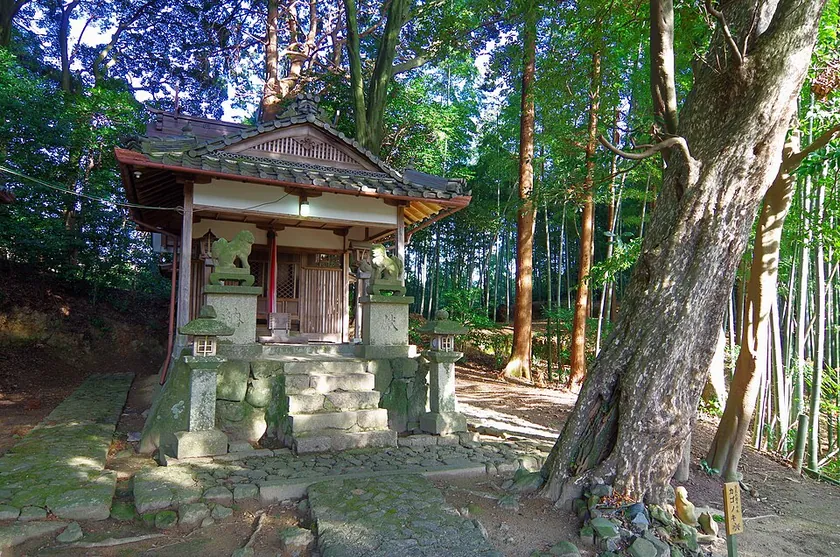
Known locally as Nagamine Hachimangu, this Oharano shrine stands on a burial mound. It honors the guardian deity Hachiman and the sun goddess Amaterasu.
The quiet Hachimangu Shrine in the Oharano Ishizukuri neighborhood is commonly referred to as Nagamine Hachimangu. The enshrined deities are Hachiman (deified Emperor Ojin, the 15th emperor of Japan), who is worshipped as a guardian of the country, and Amaterasu Omikami, the sun goddess considered the ancestral deity of the imperial family. The shrine’s founding date is unknown, but it is theorized that it may have been the location of Ishitsukuri Jinja, a shrine mentioned in the tenth-century Engishiki, a compilation of customs and official procedures that includes a list of all 2,861 shrines in existence at that time.
Ishitsukuri no Okami, the deity that was enshrined in Ishitsukuri Shrine until the Edo period (1603–1867), is now worshipped at Otoshi Jinja Shrine, located a short walk to the east of Nagamine Hachimangu. Ishitsukuri no Okami is the ancestral deity of the Ishitsukuri clan, who were in charge of carving stone coffins for the nobility. It is said that they made the coffin for Hibasuhime no Mikoto, the wife of Emperor Suinin, the 11th emperor of Japan, and were rewarded with the high rank of omuraji for their service.
What to look for
Find the doves guarding the sanctuary. They are Hachiman’s messengers and appear in both wood carvings and stone.
From the right side of the sanctuary’s stone foundation, an opening reveals part of the old burial mound.
Plan your visit
- Getting there
- From the east side of Hankyu Katsura Station, check the Keihan Kyoto Kotsu Oharano Line for a bus running to Nagamine and the 八幡前 stop. The shrine is Nagamine Hachimangu, 40 Oharano Ishizukuricho. Return departures are infrequent.
- Visiting tip
- Continue east on foot to Otoshi Jinja. Its stoneworkers’ deity connects the two Oharano shrines.
Visitor sources
Visitor information checked