
Honryuji Temple
本隆寺
Culture · Kamigyo-ku, Kyoto · Kyoto · Japan

About this place
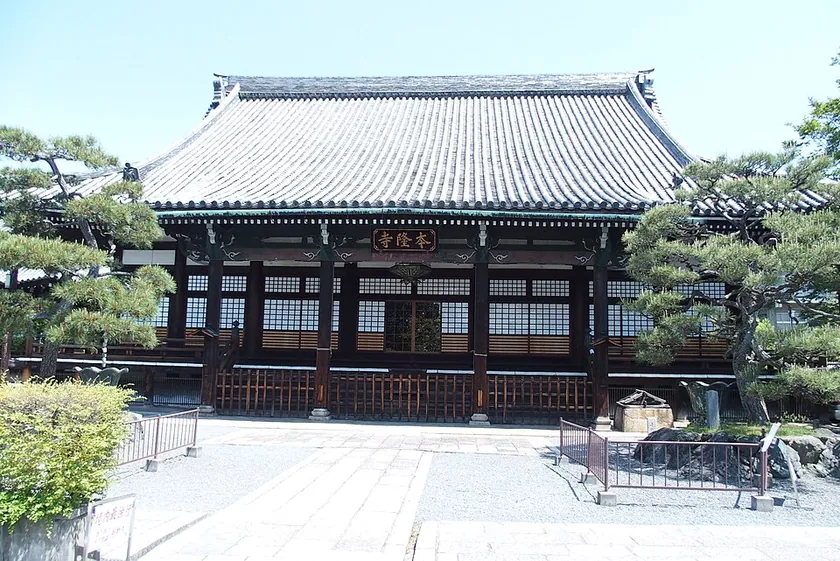
The main hall and founder’s hall at Honryuji both date to 1658. They survived the great 1788 fire that destroyed much of Nishijin, making this an unusual place to see the neighborhood’s older timber architecture.
Honryuji is the chief temple of the Shinmon sect of Hokke Buddhism, founded in 1488 by a priest named Nichishin. Its main hall (hondo) and founder’s hall (soshido), both built in 1658, are among the very few wooden buildings in Nishijin to predate 1788, when a fire laid waste to the area. These two structures are designated Important Cultural Properties.
The abundant cherry trees on the temple grounds bloom beautifully in spring, and the large pine trees nearby are thought to have soothing powers: their bark and leaves are said to stop children from crying at night when placed under their pillows.
The well in front of the main hall predates the temple and is said to be where the thirteenth-century noblewoman and nun Mugai Nyodai achieved enlightenment. She became the first Zen abbess, the first female Zen master, and one of the most influential priests of her time.
What to look for
In front of the main hall, look for the well associated with the enlightenment of Mugai Nyodai, a pioneering female Zen master.
In spring, cherry trees bloom near the old pines. A local tradition held that the pines could soothe a child who cried at night.
Plan your visit
- Opening hours
- The temple grounds open 6am–6pm.
- Admission
- There is no entry charge for the grounds.
- Getting there
- Get off the city bus at Imadegawa Jofukuji and walk about five minutes to the temple at 330 Monyacho in Nishijin.
Visitor sources
Visitor information checked