
Jojuji Temple
浄住寺
Culture · Nishikyo-ku, Kyoto · Kyoto · Japan

About this place
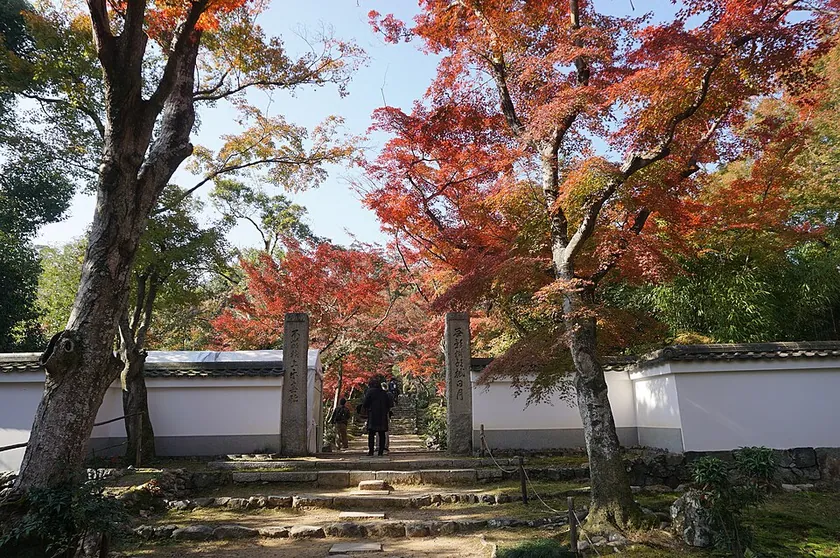
Stone steps lined with maples lead into this Obaku Zen temple. When the Hamuro family rebuilt it in 1689, they adopted a school of Zen recently introduced from China, leaving a distinctive mark on the buildings.
Jojuji Temple is best known for its natural scenery and is particularly popular in autumn, when the maple trees lining the stone stairways turn vibrant colors. Square and tortoiseshell bamboo, two rare species of bamboo flourishing on the grounds, contribute to the peaceful atmosphere. As an Obaku Zen Buddhist temple, it retains characteristics of the Obaku architectural style and emphasizes zazen seated meditation practice.
The temple is said to have been founded in 810 by the Tendai Buddhist monk Ennin (Jikaku Daishi, 794–864). The noble Hamuro family took over patronage of Jojuji, rebuilding it in the mid-thirteenth century and again in 1689 as an Obaku temple. As the Obaku school was only introduced from China in the seventeenth century, strong influences of Ming-dynasty (1368–1644) culture can be observed in the temple architecture, sutra-reading style, and monks’ attire.
The Hondo also serves as a meditation hall. The principal object of worship is a statue of Shakyamuni, the historical Buddha, and several other sculptures are placed in separate alcoves on both sides. In typical Obaku architectural style, the Hondo, the Ihaido (Memorial Tablet Hall), the Kaisando (Founder’s Hall), and the Juto Pagoda are connected to each other in a straight line.
What to look for
Trace the line of connected structures from the main hall toward the founder’s hall and pagoda, a feature of Obaku design.
Look for the two unusual bamboo varieties growing on the grounds. One develops square stems and the other has joints that resemble a tortoise’s shell.
Plan your visit
- Opening hours
- The temple buildings admit visitors during special openings. For November 21–December 13, 2026, opening is 9:30 am–4:30 pm, with entry until 4 pm.
- Admission
- The 2026 autumn opening costs ¥1,000 for adults and ¥500 for children. Check the temple calendar for later openings.
- Getting there
- Walk about ten minutes from Kami-Katsura Station on the Hankyu Arashiyama Line.
Visitor sources
Visitor information checked