
Myokakuji Temple
妙覚寺
Culture · Kamigyo-ku, Kyoto · Kyoto · Japan

About this place
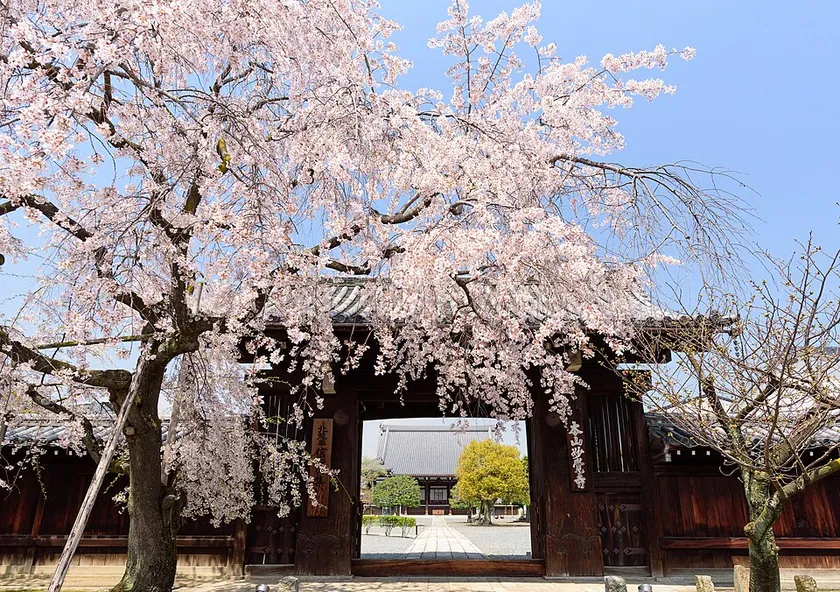
The imposing front gate at Myokakuji came from Jurakudai, Toyotomi Hideyoshi’s palace. He had earlier moved this Nichiren temple to its present neighborhood as part of a reorganization of Kyoto.
Like the several other Nichiren Buddhist temples in its vicinity, Myokakuji was relocated to this site in the late 1500s, when the warlord Toyotomi Hideyoshi (1537–1598) ruled Japan. Hideyoshi initiated a number of extensive public works in Kyoto, the capital at the time, including fortifying the city and building a lavish new palace called Jurakudai.
These projects were accompanied by orders to relocate many of Kyoto’s temples, which had been spread out across the city and its outskirts but were now to be concentrated in specific areas. Hideyoshi’s reasons for doing so were many, but included asserting control over the temples, many of which were politically influential in their own right.
Myokakuji was one of these prominent temples, frequented by the aristocracy and powerful samurai lords. It continued to thrive during Hideyoshi’s reign and after it. When the Jurakudai palace was dismantled in the final years of the 1500s, its imposing gate was moved to Myokakuji, where it still marks the temple’s main entrance.
The simple and serene temple garden is open to visitors and, while it is beautiful in every season, it is particularly noted as a place to view the autumn foliage of maple trees. Visitors can enjoy the scenery over a cup of tea and traditional sweets.
What to look for
Pause at the entrance before exploring the temple. The gate survived the dismantling of a palace whose scale is now hard to see in the city.
The garden offers a much quieter setting. The maple trees are a particular draw when their leaves change in autumn.
Plan your visit
- Opening hours
- The halls and Hoshien garden open for special visits. For the 2026 autumn opening, November 10–December 6, daytime hours are 10 am–3:30 pm, with last entry at 3 pm.
- Admission
- Autumn 2026 admission is ¥800. Elementary school children and younger enter free.
- Getting there
- Walk about ten minutes from Kuramaguchi Station on the Karasuma subway line.
- Visiting tip
- In 2026 the evening illumination runs November 21–December 6, 6–8 pm, with last admission at 7:30 pm. Check the temple announcement for future openings.
Visitor sources
Visitor information checked