
Myorenji Temple
妙蓮寺
Culture · Kamigyo-ku, Kyoto · Kyoto · Japan

About this place
Sixteen dark stones stand in raked white gravel in Myorenji’s Arhat garden. A sequence of painted rooms facing the stones brings a much newer artist’s vision into the temple.
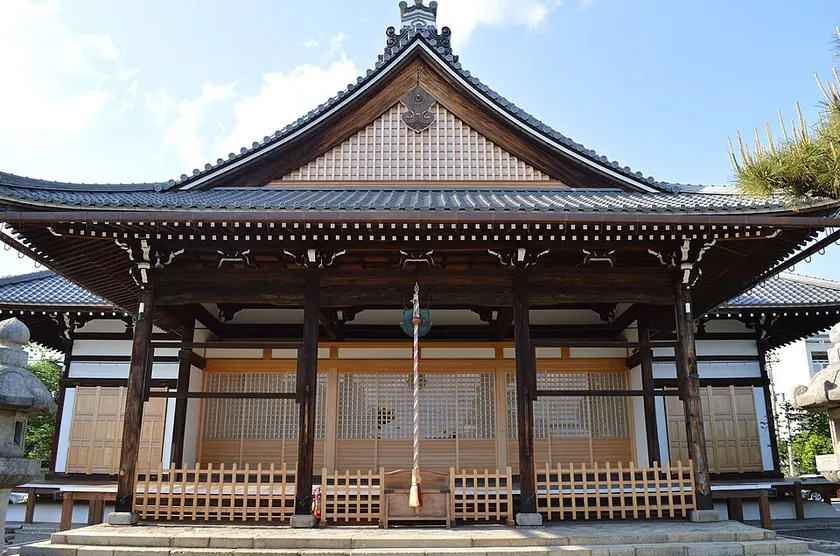
Myorenji Temple is one of the oldest Nichiren Buddhist temples in Kyoto. It was founded in 1294 by the priest Nichizo (1269–1342), who had been entrusted with missionary work in Kyoto by Nichiren (1222–1282), the founder of the Nichiren school. The temple has stood in its current location since 1587, but most of its buildings were reconstructed after a fire devastated the neighborhood in 1788.
Myorenji is noted for its Arhat rock garden, in which 16 dark rocks rise from a sea of impeccably raked white gravel. The rocks signify the bodhisattvas that bring salvation in the Lotus Sutra, on which the teachings of the Nichiren school are based. The garden is thought to have been constructed in the early 1600s, and was recently restored to its original appearance.
The fusuma sliding panels in the Shoin building facing the garden feature paintings of plants, animals, and other nature themes. These works, painted in the 1980s by Kono Yutaka, express the changing seasons and are conceived to appear particularly beautiful when viewed in the light of their respective season. For example, the depiction of red leaves on a maple tree reveals its full richness of color in the low-angled light of a November day.
What to look for
Start with the rock garden from the Shoin building. The stones’ arrangement draws on the Lotus Sutra, central to this Nichiren temple.
On the sliding panels, painter Kono Yutaka used different plants and animals for the seasons. Light entering the rooms changes how the paintings appear.
Plan your visit
- Opening hours
- Regular visits run 10 am–4 pm. The temple closes to visitors on Wednesdays and during designated services or holidays.
- Admission
- Regular garden admission is ¥500. The treasure-house visit requires a separate reservation.
- Getting there
- From the Horikawa-Teranouchi city bus stop, walk about three minutes to the temple.
- Visiting tip
- Ask about the treasure-house visit in advance if you want to see the temple’s painted screens.
Visitor sources
Visitor information checked