
Otoshi Jinja Shrine
大歳神社
Culture · Nishikyo-ku, Kyoto · Kyoto · Japan
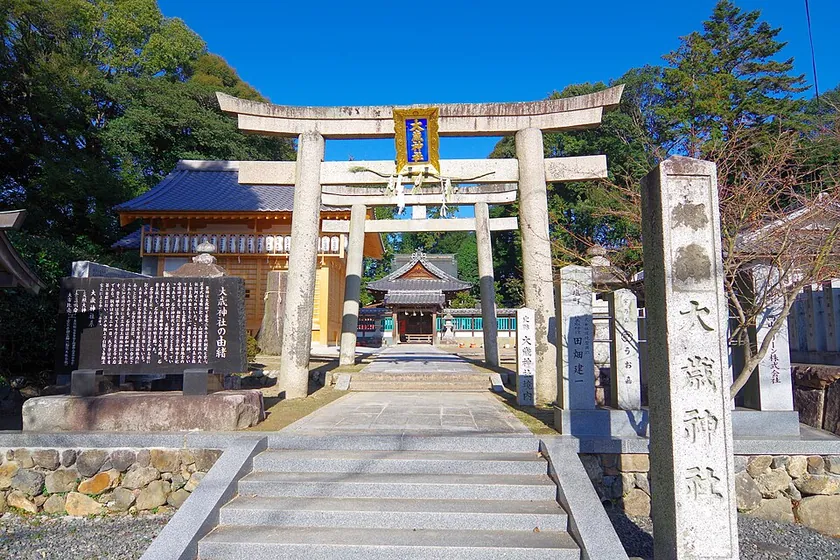

About this place
In Oharano, several old kaya trees recall the forest that once filled the grounds of Otoshi Jinja. Oil from their seeds once fueled lamps. The main sanctuary standing here dates to 1690.
Otoshi Jinja Shrine is said to have been founded in 718, while the current Honden (Main Sanctuary) dates to 1690. The shrine is dedicated to the deities Otoshi no Okami, Ishitsukuri no Okami, and Toyotamahime no Mikoto. Otoshi no Okami is the deity associated with the passage of time, as well as agriculture and abundant harvests. He is also believed to protect people from misfortune. Ishitsukuri no Okami is the ancestral deity of an influential clan that for generations made stone coffins. It is said that in the first century, when the wife of Emperor Suinin, the 11th emperor of Japan, passed away, the clan presented a coffin for her and received the highly prestigious government rank and hereditary title of Ishitsukuri Omuraji (“master stoneworkers”) from the emperor. Toyotamahime no Mikoto, the daughter of a sea deity, is believed to be the paternal grandmother of Emperor Jinmu, the first emperor of Japan.
The shrine’s autumn festival takes place on the third Sunday of October and includes prayer services and various types of offerings from the parishioners. Since the middle of the Edo period (1603–1867), the head of the Kongo school of Noh has dedicated the ancient sacred performance Okina as a prayer for peace and prosperity. In recent years, it is followed by another Noh chant titled Kaya no Mori (Forest of Kaya Trees). The shrine precincts have long been called Kaya no Mori because of the many coniferous kaya (Japanese nutmeg-yew) trees that once covered the grounds. In the past, oil extracted from their seeds was used as fuel for lamps and lanterns. Several kaya trees still grow on the premises, and more saplings have been planted to restore the shrine’s former appearance.
What to look for
One of the enshrined deities belongs to a clan of stoneworkers remembered for carving coffins for the court. Nearby Nagamine Hachimangu shares this local history.
At the autumn festival, a performer of the Kongo school dedicates the sacred Noh piece Okina as a prayer for peace and prosperity.
Plan your visit
- Getting there
- Take a Hankyu bus from JR Mukomachi or Hankyu Higashi-muko Station to Haigata. The shrine is a five- to seven-minute walk from the stop.
Visitor sources
Visitor information checked