
Sankoji Temple
三鈷寺
Culture · Nishikyo-ku, Kyoto · Kyoto · Japan

About this place
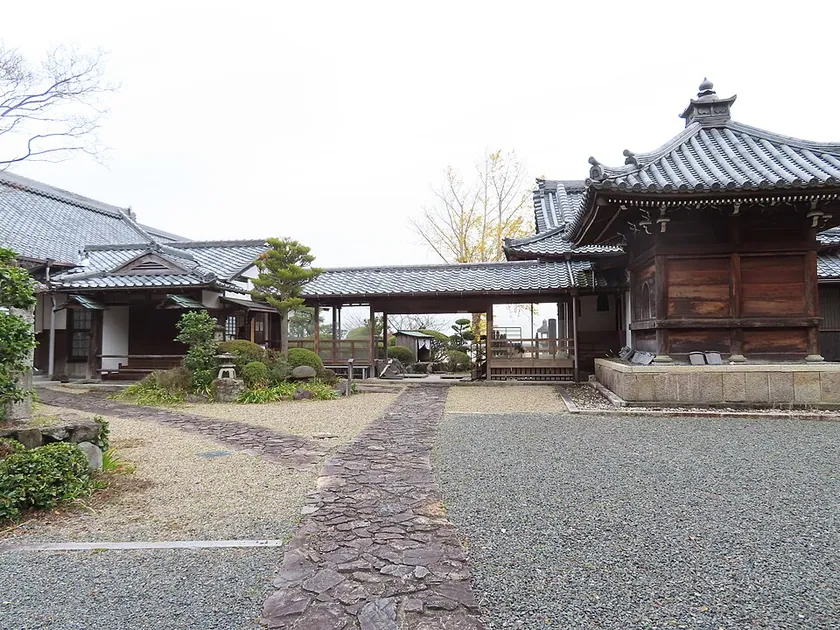
From Sankoji on Mount Kamose, the view reaches across the Kyoto basin toward Mount Hiei and the eastern hills. Its roots lie in a mountain hermitage founded in 1074.
Sankoji Temple on the slope of Mt. Kamose is best known for the scenic view it commands of the Kyoto basin. The vista encompasses Mt. Hiei and the eastern Higashiyama mountains, the Kitayama mountains in the north, Kyoto itself, and the cities of Uji and Kizugawa. The temple is quite popular to visit in autumn when maple trees in the area turn red and orange. In addition, Sankoji is located next to Yoshiminedera Temple, so they can be easily enjoyed in one trip.
The temple’s origin dates to 1074, when the Tendai school monk Gensan (983–1099) built a hermitage that he named Kitao Ojoin. In 1213, Shoku (Seizan Kokushi, 1177–1247), the founder of the three Seizan schools of Buddhism, revived the hermitage as a training hall to practice nenbutsu, the continuous recitation of the name of Amida Buddha. Shoku named the temple Sankoji, as the mountains behind the temple seemed to resemble the three-pronged ritual vajra (sankosho). In 1951, Sankoji separated from the Tendai school and became the head temple of an independent Seizan school, embracing and teaching doctrines of the Tendai, Shingon, Risshu, and Jodo schools.
What to look for
The peaks behind the temple reminded the monk Shoku of a three-pronged ritual implement. Their shape gave Sankoji its name.
The main hall houses a golden Fudo Myo-o. Nearby Yoshiminedera shares the same mountainside and makes a natural second stop.
Plan your visit
- Opening hours
- 9am–4:30pm.
- Admission
- The grounds are free. Admission to the main hall and guest hall is ¥500.
- Getting there
- Take a taxi from JR Mukomachi or Hankyu Higashi-muko Station, about 15 minutes. Drivers can use the paid parking at neighboring Yoshiminedera.
Visitor sources
Visitor information checked