
Shiramine Jingu Shrine
白峯神宮
Culture · Kamigyo-ku, Kyoto · Kyoto · Japan

About this place
Footballers and other athletes leave sports equipment at Shiramine Jingu when they pray for success. This corner of Kyoto once belonged to the Asukai family, celebrated for playing kemari, an old court ball game.
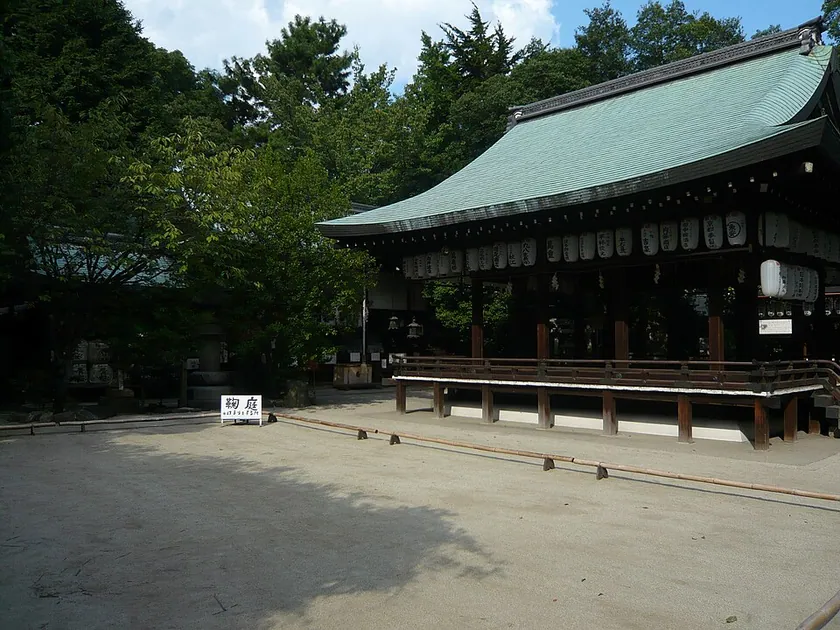
Shiramine Jingu Shrine is popular among professional athletes, students on sports teams, and sports enthusiasts who come to this Shinto sanctuary to wish for luck before an important game or the start of a season. A collection of soccer balls and other sports equipment, dedicated by athletes and fans, is displayed next to the shrine’s amulet office.
The association with sports originates from the shrine’s location on property once owned by the aristocratic Asukai family. As the Asukai were famous for excelling in kemari, an ancient game of football, the family’s guardian deity, one of the three deities honored at Shiramine, is considered the god of ball games.
That deity, Seidai Myojin, was enshrined here soon after Shiramine Jingu was established in 1868. The founding of the shrine had been the wish of Emperor Komei (1831–1867), who hoped it would help protect the nation during what was a turbulent period marked by internal conflict and foreign powers’ demands to open Japan to international trade.
Emperor Komei sought to dedicate the new shrine to his ancestor, Emperor Sutoku (1119–1164), a tragic figure who had been exiled as the result of a power struggle at court some 700 years earlier. Komei believed that appeasing and honoring Sutoku’s spirit would aid in unifying the nation and countering the foreign threat.
What to look for
Look at the donated balls and sports gear. They honor Seidai Myojin, once the family’s guardian and now revered by players of ball sports.
The shrine also honors two exiled emperors, Sutoku and Junnin. Emperor Meiji oversaw the completion of the shrine in 1868.
Plan your visit
- Opening hours
- 8am–5pm. The amulet counter closes at 4:30pm.
- Getting there
- Take city bus 9 or 12 to Horikawa Imadegawa, then walk east for one minute. On the subway, use exit 4 at Imadegawa and walk west along Imadegawa-dori.
Visitor sources
Visitor information checked