
Shojiji Temple
勝持寺
Culture · Nishikyo-ku, Kyoto · Kyoto · Japan

About this place
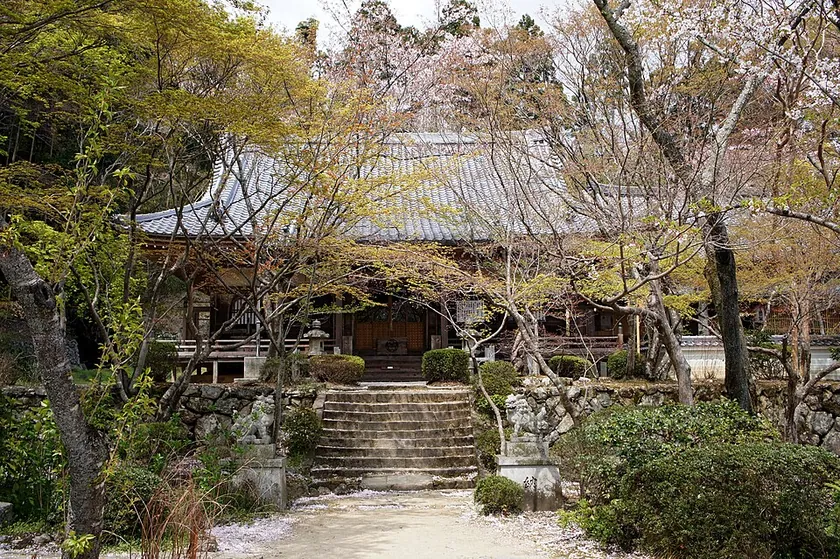
Shojiji lies near the foot of Mount Oshio among cherry trees linked with the poet-monk Saigyo. One tree is revered as a descendant of the cherry he planted here.
The location of Shojiji Temple near the base of Mt. Oshio makes it a popular destination to enjoy the natural scenery and changing seasons. In spring, the 100 cherry trees on the grounds bloom white and light pink. One of them is especially famous as the third-generation descendant of a tree planted by the renowned poet-monk Saigyo Hoshi (1118–1190). This cherry tree is known as Saigyo-zakura and is the reason why Shojiji is often referred to as the “temple of flowers.” The many maples in the precincts and on the surrounding mountain slopes create a verdant landscape in summer and fill the area with brilliant colors in autumn. Winter’s subdued palette makes for a contemplative scene, and at times, snow blankets the grounds in pure white. Shojiji also houses a diverse collection of well-preserved Buddhist statuary. Please note that the temple is closed in February.
According to temple legend, Shojiji was originally founded in 679 by the ascetic En no Gyoja (634–701?) and rebuilt on a larger scale in 791 by Saicho (Dengyo Daishi, 767–822), the founder of Tendai Buddhism in Japan. In 838, the temple grounds encompassed 49 halls, pagodas, and other buildings. However, like much of Kyoto, Shojiji was almost completely destroyed during the Onin War (1467–1477), a shogunate succession conflict. The only structure that survived is the ninth-century Niomon Gate, which stands about 500 meters to the southeast, marking the beginning of the main approach to the temple. Most of the current buildings date to the late sixteenth century.
What to look for
Inside the Rurikoden collection, look at the heads of the Twelve Divine Generals. Each carries a different animal from the zodiac.
The tall paired guardians once stood in the entrance gate. Nearby, a seated figure of Saigyo ties the temple’s sculpture to its poetry and blossoms.
Plan your visit
- Opening hours
- 9:30am–4:30pm, last entry at 4pm. Closed throughout February and August. Check the temple calendar for other closure dates.
- Admission
- Adults ¥500. Junior high and high school students ¥400. Elementary pupils ¥300.
- Getting there
- From Hankyu Higashi-muko Station, take a Hankyu bus to its Minami-Kasugacho terminus. Allow around 20–25 minutes on foot from there to the temple.
Visitor sources
Visitor information checked