
Shokokuji Temple
相国寺
Culture · Kamigyo-ku, Kyoto · Kyoto · Japan

About this place
Shogun Ashikaga Yoshimitsu established Shokokuji beside his palace in 1392. Its grounds now contain temple halls, gardens, a pond and the Jotenkaku art museum.
The vast grounds of Shokokuji Temple include dozens of halls and other buildings, as well as the Jotenkaku art museum, a shrine, a pond, and twin gardens by the abbot’s quarters that reflect the teachings of Rinzai Zen, the school of Buddhism with which the temple is affiliated.
Shokokuji was established in 1392 at the request of the third Muromachi shogun, Ashikaga Yoshimitsu (1358–1408). The shogun regularly practiced zazen meditation and desired to advance the cause of Zen Buddhism by building a grand temple that would become a center of Zen culture. The temple was erected next to the shogun’s palace.
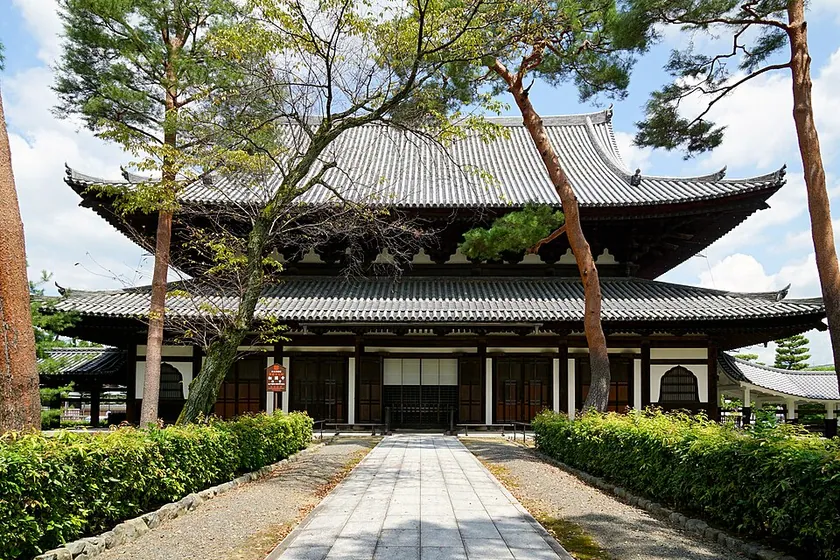
The temple’s halls have been destroyed by fire and war several times over the centuries. The oldest surviving structure on the grounds is the Hatto, or Dharma Hall, built in 1605 and now used as the main hall, the building that houses the image of the temple’s principal deity. At Shokokuji that deity is Shakyamuni, the historical Buddha.
The painting of a dragon on the Hatto ceiling represents protection of the building and of Buddhism itself. The dragon’s gaze is said to follow visitors wherever they go within the hall. The painting can be viewed during special visitation days in spring and autumn.
What to look for
The Dharma Hall dates to 1605. Its ceiling dragon is painted so its gaze seems to follow someone moving through the hall.
The dragon can be seen during special openings. Choose the art museum or the exterior grounds independently if your dates fall outside them.
Plan your visit
- Opening hours
- For the autumn 2026 interior opening, September 26–December 15, entry is 10am–4pm and gates close at 4:30pm. Ceremonies change some dates and hours, including December 8.
- Admission
- Autumn 2026 special opening costs ¥1,000 for ages 19 and up and ¥500 for ages 6–18.
- Getting there
- From Kyoto Station, take the Karasuma subway line north to Imadegawa. City buses 59, 201 and 203 also stop at Karasuma Imadegawa near the temple.
- Booking
- Check the temple’s public opening dates if you want to enter the Dharma Hall to see the dragon.
- Visiting tip
- Time your visit to the Dharma Hall and its ceiling dragon for a special opening. Check the temple calendar for the rooms available on your date.
Visitor sources
Visitor information checked