
Shoseien Garden
渉成園
Nature · Shimogyo-ku, Kyoto · Kyoto · Japan

About this place
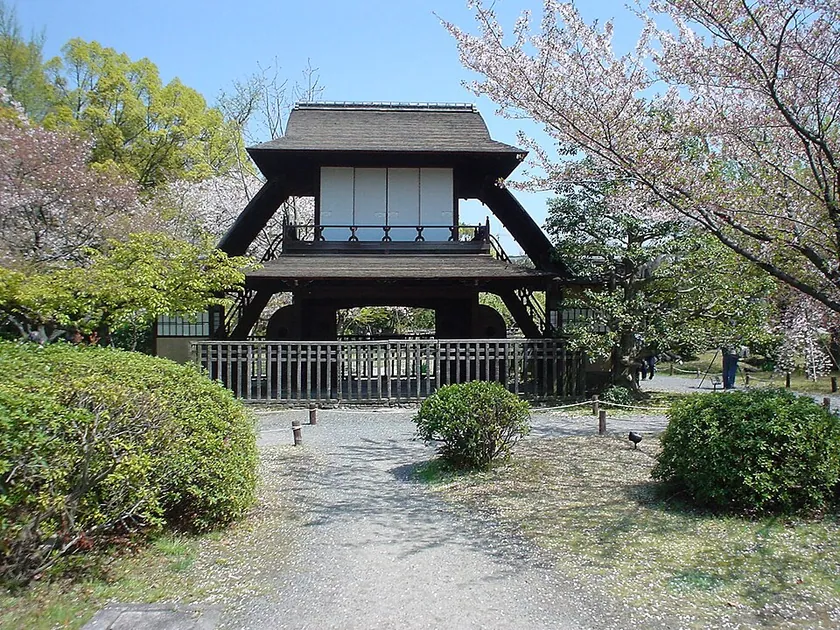
This pond garden belonged to Higashi Honganji, whose retired head priests lived here and whose guests were received in its rooms. The paths lead between tea buildings, water and views carefully composed from the banks.
Shoseien Garden traditionally served as a retirement residence for head priests of Higashi Honganji Temple, to which the garden belongs. The estate was originally constructed in the mid-seventeenth century on land donated to the temple by shogun Tokugawa Iemitsu (1604–1651). It was designed by the classical scholar, poet, and calligrapher Ishikawa Jozan (1583–1672), whose name for the garden comes from a work by the Chinese poet Tao Yuanming (365–427).
The eight-acre grounds center on a pond and feature a number of carefully composed views. Some of the views incorporate elements of the landscape beyond the walls and can be enjoyed from the walking paths that crisscross the garden. In addition to the former residential quarters, the buildings in the garden include teahouses and reception facilities. Serving as a venue for entertaining guests visiting Higashi Honganji is a traditional function of Shoseien that continues today.
The garden has been destroyed by fire several times over the centuries, most recently in 1864. Its current configuration and most of the buildings are the result of rebuilding completed in the 1890s. Shoseien was designated a Place of Scenic Beauty by the Japanese government in 1936, and has more recently been noted for its diversity of plant and animal life. The grounds provide a habitat for several species of birds, butterflies, and dragonflies, as well as rare plants such as mizuaoi (Monochoria korsakowii), a type of water hyacinth with bluish-purple flowers that bloom in autumn.
What to look for
Pause along the paths to see how scenery beyond the garden walls becomes part of the view from inside.
Most buildings reflect the late nineteenth-century rebuilding after Kyoto’s 1864 fire. In autumn, a blue-purple aquatic flower called mizuaoi can bloom here.
Plan your visit
- Opening hours
- Daily. March–October, 9am–5pm, last entry at 4:30pm. November–February, 9am–4pm, last entry at 3:30pm.
- Admission
- Requested garden maintenance donation starts at ¥700 for adults and ¥300 for junior high and high school students. Elementary pupils and younger children enter free.
- Getting there
- Walk about ten minutes from JR Kyoto Station or seven minutes from Gojo subway station.
- Visiting tip
- A regular visit covers the outdoor gardens. The buildings open separately for special occasions.
Visitor sources
Visitor information checked