
Uhoin Temple
雨宝院
Culture · Kamigyo-ku, Kyoto · Kyoto · Japan

About this place
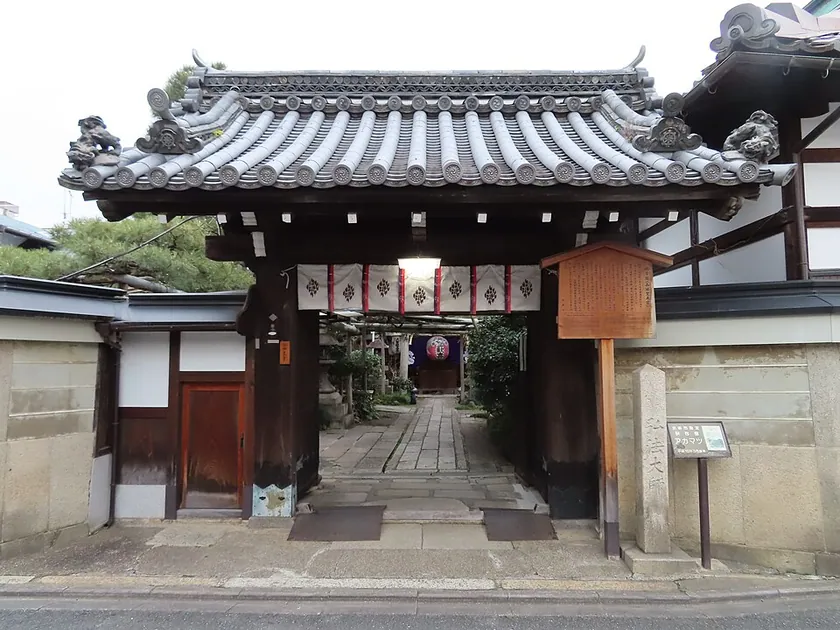
Nishijin’s silk dyers once carried water from Uhoin’s well to their workshops. They believed it produced particularly good colors in silk, giving this Shingon temple a lasting place in the neighborhood’s weaving history.
According to tradition, Uhoin Temple was established in 812 by the Buddhist priest Kukai (774–835), founder of the Shingon school of esoteric Buddhism to which Uhoin ascribes. Kukai was one of the most influential priests of his time and had the support of the imperial court, which allowed him to establish several sprawling temple complexes in Kyoto. Uhoin was one of these grand temples, but it was completely destroyed during the Onin War (1467–1477), a civil war that devastated the city. The current structures were rebuilt after a fire in 1788.
Uhoin Temple has been revered by the textile artisans of Nishijin for centuries. The area’s dyers have held the temple in particularly high regard, because water from its well was said to produce the best results when mixed with dye for silk. The well was believed to never run dry, no matter how many craftsmen came to collect the water.
The tranquil grounds are an ideal place for quiet reflection in all seasons except for early spring when the cherry trees bloom, attracting large crowds. Among the trees at Uhoin is a rare type of cherry with green buds called gyoiko-zakura, which is thought to have been developed in Kyoto for ornamental purposes during the Edo period (1603–1867).
What to look for
The ornamental gyoiko cherry is an unusual sight in blossom season. Look for the green tones that distinguish it from the other cherries.
Temple tradition names Kukai as its founder. The stories of the well and the local dyers connect that religious history with the working life of Nishijin.
Plan your visit
- Getting there
- Take city bus 201 or 206 to Imadegawa-Jofukuji, then walk about five minutes.
- Visiting tip
- Beside the main hall, look for Kanki-zakura, a double-flowering cherry whose blossoms grow low on the tree. The temple keeps its principal sacred image concealed.
Visitor sources
Visitor information checked