
Yoshiminedera Temple
善峰寺
Culture · Nishikyo-ku, Kyoto · Kyoto · Japan

About this place
Yoshiminedera spreads across a wooded mountainside southwest of Kyoto. Pilgrims on the Saigoku Kannon route come to its Kannondo hall, while branching paths climb to other halls and views over the basin.
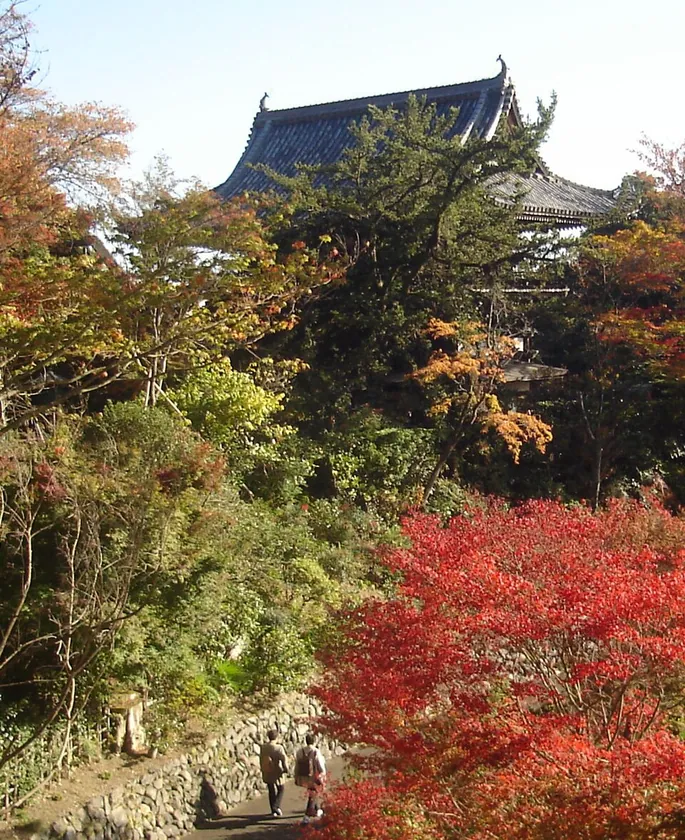
Yoshiminedera is a Tendai school Buddhist temple located in the forested mountains of Oharano in southwestern Kyoto. It is one of the 33 temples on the Saigoku Kannon Pilgrimage, a route connecting a series of temples in the Kansai area dedicated to Kannon, the bodhisattva of compassion. Numerous cherry trees, hydrangeas, and maples cover the extensive grounds of Yoshiminedera, adding color to the scenery throughout the year. Due to the high elevation, several spots throughout the temple offer scenic views of the city of Kyoto.
Yoshiminedera was founded in 1029 by Gensan (983–1099), a monk from Enryakuji Temple on Mt. Hiei, who came to the mountains southwest of Kyoto looking for a sacred place to build a retreat. According to legend, when Gensan stopped to rest, a deity appeared and asked him to found a temple at that location. Construction on rocky ground proved difficult, but Gensan received a vision in a dream that help would soon arrive. The next night, a group of wild boars crushed the rocks with their tusks and leveled the site. Gensan carved a statue of the Thousand-Armed Kannon and built a small temple that he named Hokkein to enshrine it. The name was changed to Yoshiminedera in 1034, when Emperor Go-Ichijo (1008–1036) decreed that prayers for the protection of the country should be held there. With the patronage of the court, Yoshiminedera became a sprawling temple complex that included over 50 subtemples.
What to look for
Look for Yuryu no Matsu, the playful dragon pine. Wooden supports train its immense trunk horizontally across a flight of steps.
From the main hall, take one of the uphill paths to see how the view changes. Cherry trees flower across the grounds in spring.
Plan your visit
- Opening hours
- Weekdays 8:30am–5pm, weekends and public holidays 8am–5pm. Last entry is 4:45pm. There are special New Year hours.
- Admission
- Adults ¥500. High school students ¥300. Elementary and junior high pupils ¥200.
- Getting there
- The direct Hankyu 66 bus ended in May 2025. From JR Mukomachi or Hankyu Higashi-muko, the temple lists a taxi or bus 63 to Haigata followed by a 3.4 km uphill walk.
Visitor sources
Visitor information checked