
Tanabe Castle Ruins
田辺城
Culture · Maizuru · Kyoto · Japan

About this place
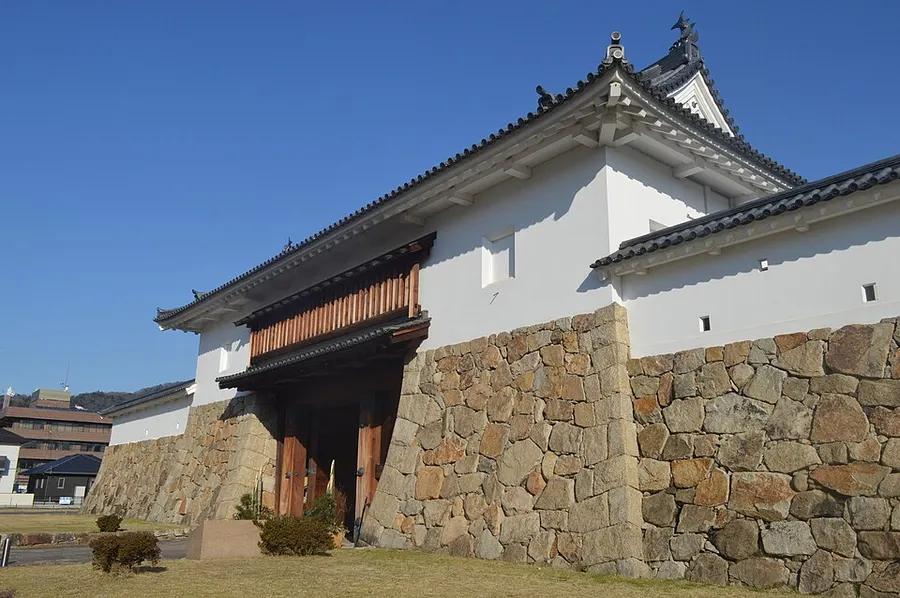
A portion of the stone ramparts and foundation stones from the castle keep are the only structural features of Tanabe Castle that remain today.
A portion of the stone ramparts and foundation stones from the castle keep are the only structural features of Tanabe Castle that remain today. The main gate and a part of the stone wall, however, has been reconstructed, and the grounds are now open to the public as Maizuru Park. A museum dedicated to the castle’s history and inhabitants is located in the building above the gate.
Tanabe Castle was built in 1582 for Hosokawa Fujitaka, also known as Hosokawa Yusai (1534–1610), after he turned over official control of Tango Province to his son, Hosokawa Tadaoki (1563–1646). It was a time when trade was emphasized, and the castle was built on unusually low-lying ground rather than a more defensible hilltop. This was also the case for Fujitaka’s previous residence of Miyazu Castle to the northwest. Nevertheless, Fujitaka found himself under siege in the months before the decisive Battle of Sekigahara in 1600. Fujitaka’s son, Hosokawa Tadaoki (1563–1646), had taken most of their forces to Sekigahara in preparation for battle. With only 500 men facing an army of 15,000, Fujitaka set fire to Miyazu Castle and garrisoned himself at Tanabe Castle. The battle lasted for 52 days, until, in an unusual turn of events, the emperor intervened on Fujitaka’s behalf because of his precious knowledge of poetry.
This English-language text was created by the Japan Tourism Agency.