
Kyoto Bamboo Park
京都市洛西竹林公園
Park · Muko · Kyoto · Japan
About this place
In 1981, Kyoto Bamboo Park was established as part of an effort to preserve the city’s bamboo groves that had diminished because of land development.
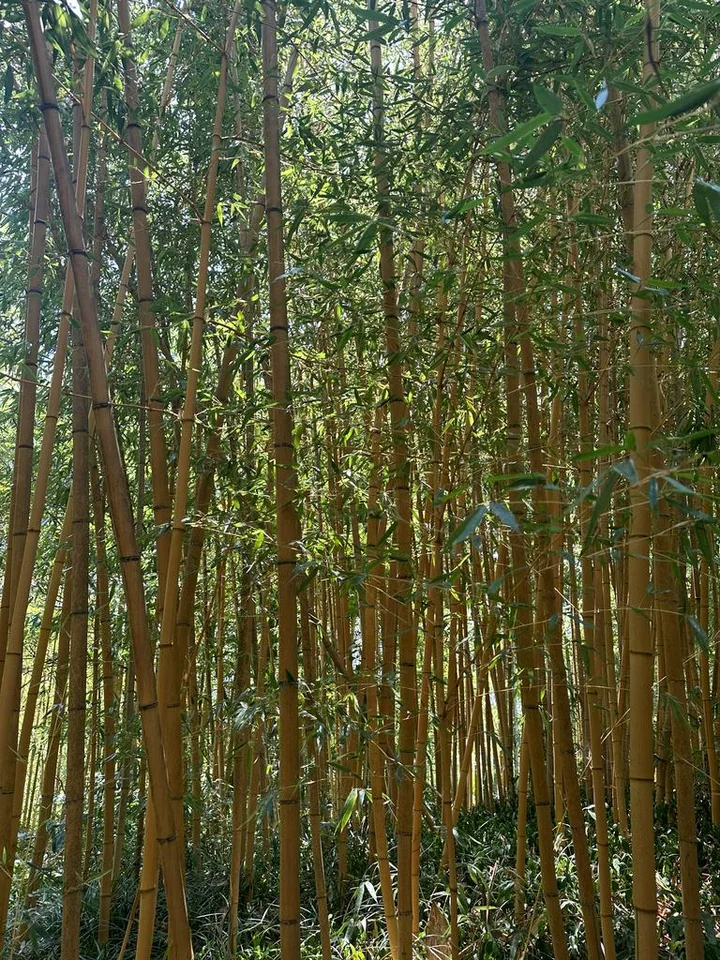
In 1981, Kyoto Bamboo Park was established as part of an effort to preserve the city’s bamboo groves that had diminished because of land development. The park’s purpose is to educate visitors about bamboo, its diversity, ecology, and the history of bamboo cultivation in the area. The vast complex contains a museum, a shop with bamboo products and souvenirs, a traditional tea room, a spacious strolling garden with around 110 native and non-native species of bamboo, and a recreation area.
Text panels, photos, and display items cover botanical data, cultivation and harvesting techniques, and the use of bamboo in traditional architecture and crafts. A noteworthy exhibit is a recreation of the bamboo filament lightbulb that the US inventor Thomas Alva Edison (1847–1931) developed and manufactured using bamboo from Kyoto. Many of the panels include English translations.
One wall displays examples of high-quality bamboo produced in Kyoto for construction and decorative purposes. The natural state of each variety can be compared with stalks specially treated to achieve certain coloration or markings, as well as with square-shaped stalks grown by attaching a wooden frame to the young shoot. Kyo-meichiku (“Kyoto bamboo”) is designated one of the Traditional Industries of Kyoto. On the opposite side of the hall are examples of bamboo from other countries.
This English-language text was created by the Japan Tourism Agency.