
Fudarakusan-ji Temple
補陀洛山寺
Culture · Nachikatsuura · Wakayama · Japan

About this place
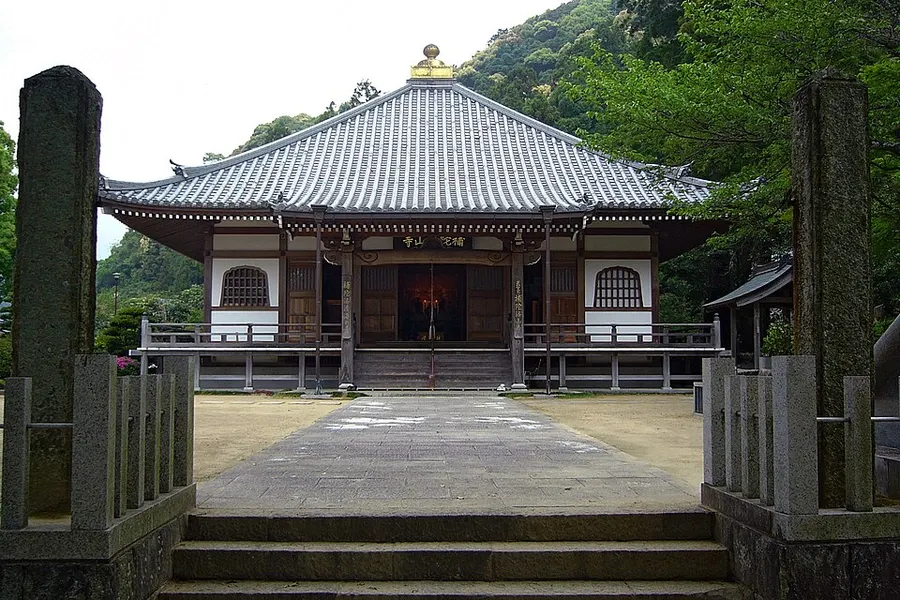
Fudarakusan-ji is a Tendai Buddhist temple that was built facing the Pacific Ocean across a white sandy beach.
Fudarakusan-ji is a Tendai Buddhist temple that was built facing the Pacific Ocean across a white sandy beach. Recent urban development has obscured this view, but the temple retains its position in Kumano’s spiritual landscape as a link between the mountains and the sea. It shares the same history of Buddhist-Shinto syncretism as the three grand shrine-and-temple complexes that lie at higher altitudes.
The temple traces its founding to Ragyo, an ascetic said to have arrived in Kumano from India in the fourth century. It later became known for the practice of Fudaraku-tokai (Crossing the Sea to Fudaraku). This was a ritual of self-martyrdom in which a monk would set sail alone with limited supplies in the hopes of reaching Fudaraku, a Pure Land far to the south presided over by Kannon, bodhisattva of compassion.
The temple houses a wooden statue of its chief enshrined deity, Thousand-Armed Kannon. Around 170 centimeters tall, the statue was sculpted during the Heian period (794–1185), although the current halo made of lighter-colored wood was added in the seventeenth century. The statue is an Important Cultural Property of Japan, and is only displayed publicly three times a year, during rituals on January 27, May 17, and July 10.
This English-language text was created by the Japan Tourism Agency.