
Kumano Nachi Taisha Grand Shrine
熊野那智大社
Culture · Nachikatsuura · Wakayama · Japan

About this place
Kumano Nachi Taisha Grand Shrine traces its history back some 1,700 years.
Kumano Nachi Taisha Grand Shrine traces its history back some 1,700 years. It was founded as a new location for the worship that had begun at Nachi Waterfall, and upholds the same tradition of reverence for nature. The shrine is also known for the Nachi Fire Festival, a spectacular parade of torches and portable fan shrines held each July 14.
For much of its history, Nachi Taisha and neighboring Seiganto-ji Temple were part of the same religious complex, exemplifying the Shinto-Buddhist syncretism once prevalent in Japan. Following the Meiji Restoration of 1868, the new government ordered the separation of Shinto and Buddhism, and today the temple and shrine are formally distinct.
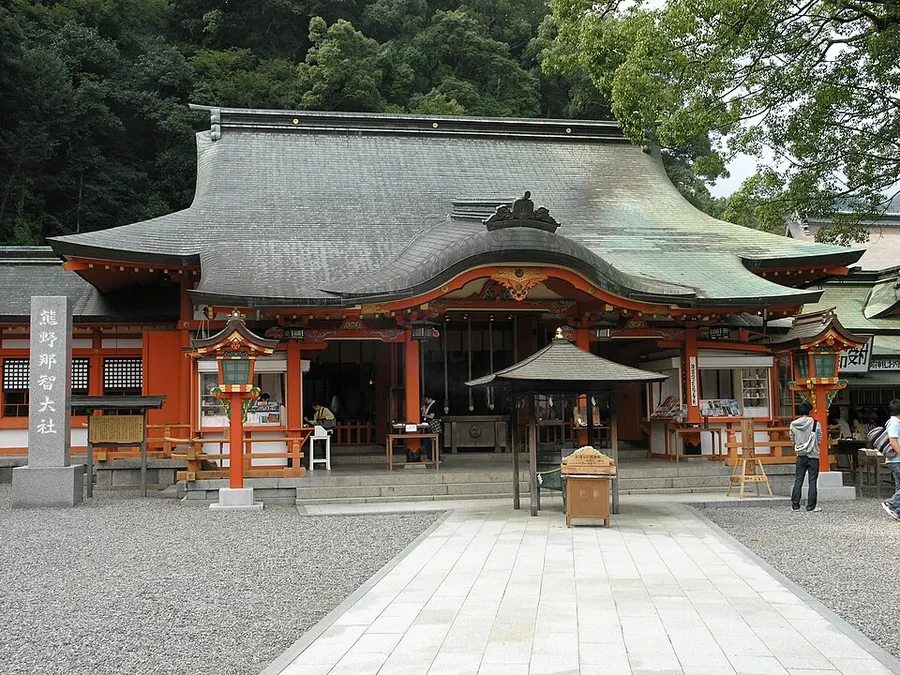
The shrine grounds are arranged around a central courtyard, with the main torii gate at the northeast. From the torii, the office buildings and stage area for dengaku dance performances are to the left. Directly ahead of the torii is the Treasure Hall (homotsuden) and Miagatahiko-sha, a subsidiary shrine. To the right, at the northwest end of the courtyard, stands the worship hall (haiden).
Of these, Kumano Fusumi-no-Okami is the chief enshrined deity. The deities of numbers 2 through 4 are collectively known as the Kumano Sansho, or Three Kumano Deities, and are worshiped at all three of the Kumano grand shrines.
This English-language text was created by the Japan Tourism Agency.