
Hotokusan Inari Taisha Shrine
宝徳山稲荷大社
Culture · Nagaoka · Niigata · Japan

About this place
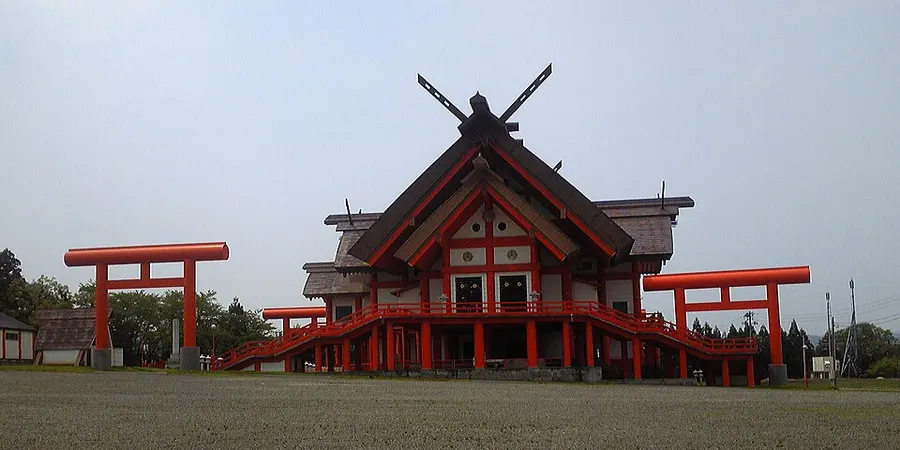
Hotokusan Inari Taisha is built primarily from concrete as opposed to wood, which is more common in shrines of this type.
This commanding shrine is visible from a distance as visitors approach its hillside location outside the city center of Nagaoka. The black gabled roofs and vermillion-and-white features tower above the forest.
Hotokusan Inari Taisha is built primarily from concrete as opposed to wood, which is more common in shrines of this type. The concrete protects the shrine against earthquakes and also the harsh winter conditions in this part of Japan.
The shrine has two complexes. The lower complex is the larger of the two and is situated about halfway up the hillside. A second, slightly smaller complex sits at the top of the hill, but it is only used twice a year for local festivals. The shrine holds a night festival called Yomatsuri each year, using between fifty and sixty thousand red candles for its main ritual.
Next to the hilltop complex there is a small stone shrine. This is the oldest remaining part of Hotokusan Inari Taisha. The exact age of this stone shrine is unknown, as it predates the earliest site records from around 1,500 years ago. Some have speculated that it could date from the late Jomon period, which ended in 900 BCE, but this is not yet corroborated.
This English-language text was created by the Japan Tourism Agency.