
Tahōin Temple
多宝院 - しだれ桜
Culture · Noshiro · Akita · Japan

About this place
Tahōin is a temple of the Sōtō school of Buddhism, the largest school in the Zen sect.
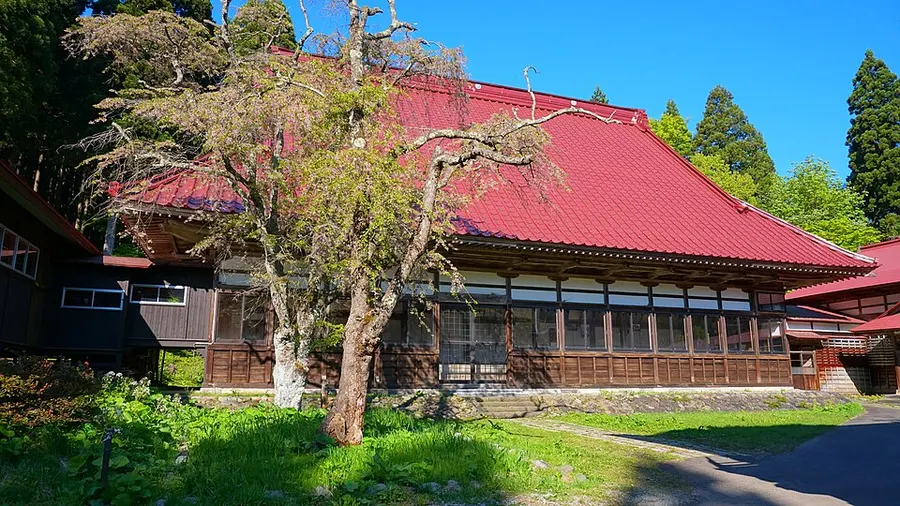
Tahōin is a temple of the Sōtō school of Buddhism, the largest school in the Zen sect. The temple was founded in 1489 in what is now Ibaraki Prefecture, and for many decades it served as the family temple of the Tagaya clan. In 1602, when Satake Yoshinobu (1570–1633) became daimyo of Kubota domain (now Akita Prefecture), many of his retainers and supporters accompanied him. The Tagaya clan was tied by marriage and fealty to the Satake family, and they relocated to Kubota—bringing the family temple with them. In 1610, Tahōin was re-established at a site just below Hiyama Castle on Mt. Kiriyama, but was moved again in 1771 to its current location.
The main gate (sanmon) is of relatively simple design, which is somewhat unusual for the Tagaya family’s rank. Historians cite this as evidence of the financial hardships caused by the “alternate attendance” policy (sankin kōtai) enforced by the Tokugawa shogunate during the Edo period (1603–1867). The policy required daimyo—and vassals like the Tagaya family—to alternate between living in their own domains and in the capital of Edo (now Tokyo). The cost of maintaining dual residences and of the ceremonial processions to and from Edo was a constant financial drain. According to temple records, the Tagaya family asked the local populace for help in raising funds for the construction of Tahōin.
This English-language text was created by the Japan Tourism Agency.