
Hiyoshi Taisha Shrine
日吉大社
Culture · Otsu · Shiga · Japan

About this place
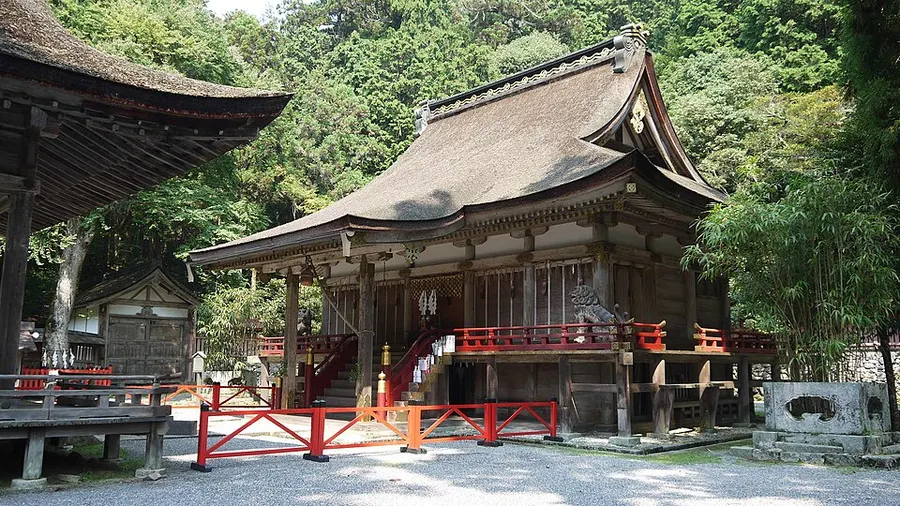
The Hiyoshi Taisha shrine complex contains forty individual shrines in total—seven major shrines and thirty-three lesser shrines.
The Hiyoshi Taisha shrine complex contains forty individual shrines in total—seven major shrines and thirty-three lesser shrines. The first record of religious practice in the area is found in the eighth-century chronicle Kojiki, which notes that the deity Ōyamakui no kami dwelled in a rock near the summit of Mt. Hachiōji, a foothill along the eastern side of Mt. Hiei. Over time, many more deities came to be enshrined in what was once the largest shrine complex in Japan.
For centuries, religious practice on Mt. Hiei was a syncretic fusion of Buddhism and Shinto. Hiyoshi Taisha has a long association with Enryakuji Temple, which was established in 788 and is the head temple of Tendai Buddhism. The shrines of Hiyoshi Taisha gradually became part of the Enryakuji religious complex and remained so until 1868.
Enryakuji was one of the largest and most influential Buddhist institutions in Japan until 1571, when the warlord Oda Nobunaga (1534–1582) had the entire temple complex burned to the ground, including the shrines of Hiyoshi Taisha. Nobunaga’s successor Toyotomi Hideyoshi (1537–1598) supported the rebuilding of the seven major shrines, and all were completed by 1601.
This English-language text was created by the Japan Tourism Agency.