
Lake Biwa Canal
琵琶湖疏水
Nature · Otsu · Shiga · Japan

About this place
The Lake Biwa Canal runs from Lake Biwa in Otsu to multiple rivers in Kyoto.
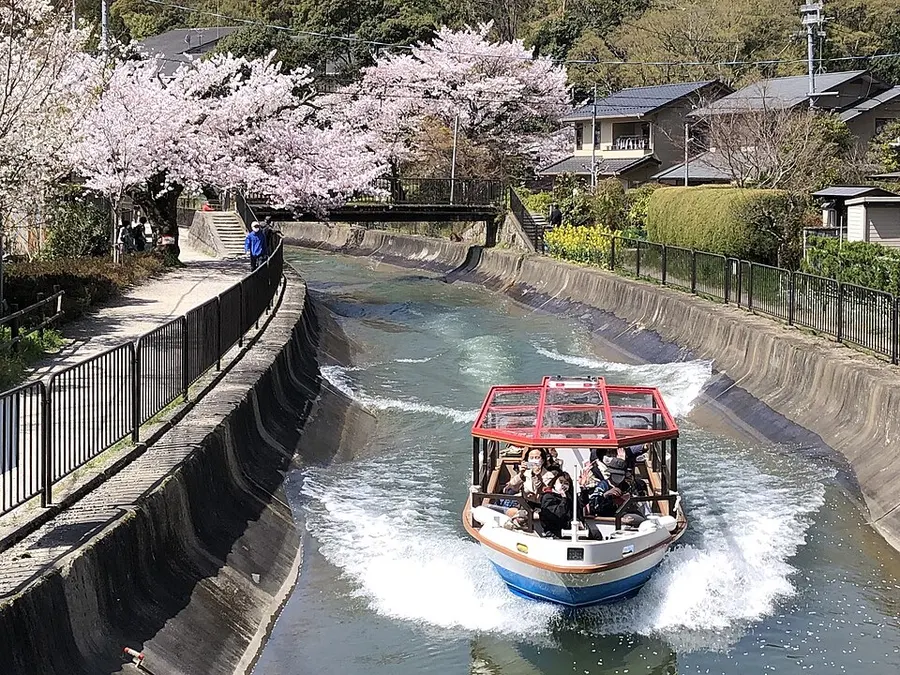
The Lake Biwa Canal runs from Lake Biwa in Otsu to multiple rivers in Kyoto. It supplies the former capital with fresh drinking water and hydroelectric power, and provides a cruising route for pleasure boats between the two cities.
Construction of the 20-kilometer main canal began in 1885 and was completed five years later. The project was spearheaded by civil engineer Tanabe Sakuro (1861–1944) and was considered a feat of modern engineering at the time. Tanabe also built Japan’s first hydroelectric power station in Kyoto, utilizing water flowing through the canal. Besides being a source of drinking water and power, the canal was also the fastest way to move people and goods between Kyoto and Otsu.
The main canal begins at the southwest portion of Lake Biwa and runs past Miidera Temple into its first (and longest) tunnel, emerging in the Yamashina area of Kyoto. From there, it passes through three more tunnels and runs close to Nanzenji Temple, where a brick aqueduct still carries water. It joins the Kamo River near the Imperial Palace and eventually joins the Hori River in Fushimi. There is a difference in elevation between Otsu and Kyoto, and one section along the canal route near Nanzenji Temple is particularly steep. The Keage Incline, an inclined plane with tracks, was built to move boats up and down a slope in that area.
This English-language text was created by the Japan Tourism Agency.