
Hoshakuji Temple
宝積寺
Culture · Oyamazaki · Kyoto · Japan

About this place
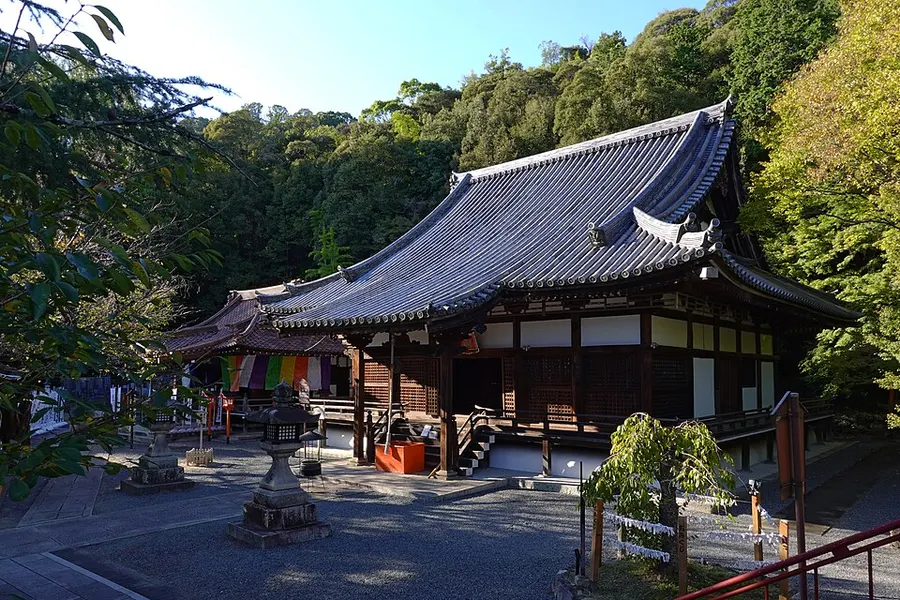
Hoshakuji, often called the “treasure temple,” owns many valuable examples of Buddhist statuary and ritual tools.
Hoshakuji, often called the “treasure temple,” owns many valuable examples of Buddhist statuary and ritual tools. The most notable are five statues that portray King Enma, the Judge of hell, and his four attendants. It is the oldest known set depicting this group of divinities. The temple treasures also include a lucky hammer and wand that have been used to bestow good fortune on worshippers for centuries. A ritual called Oni Kusube, held in April, uses peach wood bows, mugwort arrows, cypress leaves, and kagami mochi rice cakes to exorcise demons. The tradition is thought to reflect the earliest style of ceremonies to ward off evil.
Following a decree by Emperor Shomu (701–756), the monk Gyoki (668–749) founded Hoshakuji in 724. According to legend, the temple was built to enshrine the wish-granting kozuchi hammer and uchide wand that the emperor received from a divine dragon in a dream. In another tale, an imperial procession in 784 was stalled by floods that washed away a bridge until an old man appeared and walked upon the water, miraculously restoring the bridge before vanishing in a ray of light that shone toward Hoshakuji. Upon inspection, the feet of the temple’s statue of Kannon, the bodhisattva of compassion, turned out to be wet, and it became known as the “bridge-building Kannon.”
This English-language text was created by the Japan Tourism Agency.