
Osaki Hachimangu Shrine
大崎八幡宮
Culture · Aoba-ku, Sendai · Miyagi · Japan

About this place
Hachimangu Shrine exemplifies the samurai aesthetic of the early Edo period (1603–1867) and was built as a grand statement of wealth, power, and cultural sophistication.
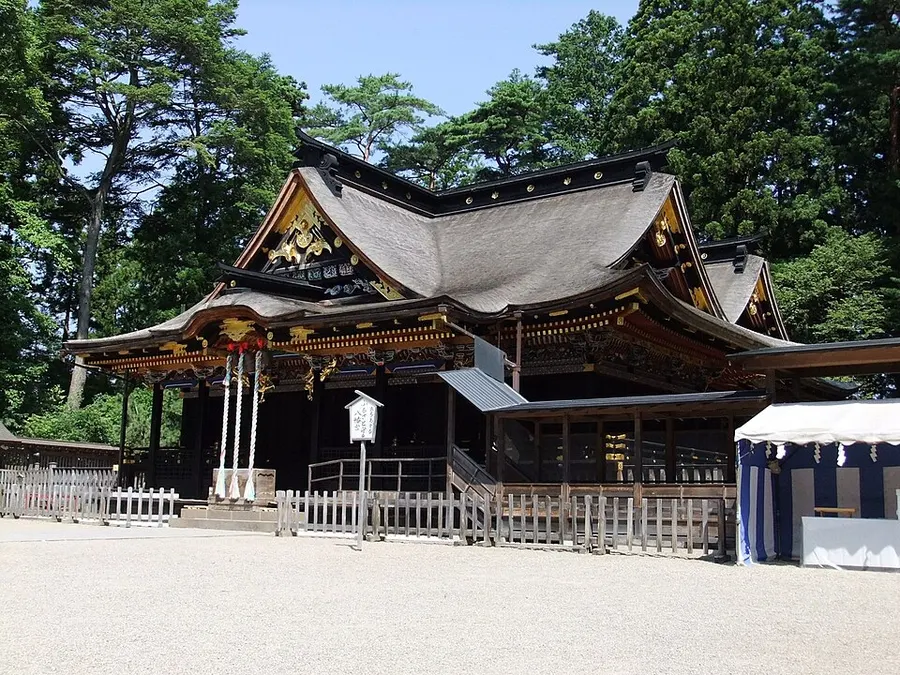
Hachimangu Shrine exemplifies the samurai aesthetic of the early Edo period (1603–1867) and was built as a grand statement of wealth, power, and cultural sophistication. The shrine was built on the orders of Lord Date Masamune (1567–1636) and enshrines the Date family’s patron deity, Hachiman, the Shinto kami of war. The finest craftsmen from around the country were commissioned for the construction, which lasted three years (1604–1607). The shrine’s main hall is a National Treasure.
The main hall is opulently decorated with gold leaf and beautifully painted carvings. The eaves of the hip-and-gable roof curve out from the central gable framing a pair of gilded cranes, symbols of longevity. The transoms are decorated with tigers, phoenixes, and other auspicious animals, as well as heavenly beings in flight. A pair of fierce gilded dragons appear to descend from the eaves above the entrance, poised with their talons bared. The shrine’s ornamentation is enhanced by its black-lacquered woodwork, which evokes Date Masamune’s black battle armor.
The approach to the shrine is up a steep flight of stone steps to a cobbled path flanked by trees. Visitors pass through three torii gates on their way to the main hall. The first and third are red, with large wooden plaques carved with the shorthand name of the shrine (Hachimangu). The first Chinese character (Hachi-) is composed of two simple strokes, which have been stylized to resemble a pair of doves, the divine messengers of the deity Hachiman.
This English-language text was created by the Japan Tourism Agency.