
Shimabara Castle
島原城
Culture · Shimabara · Nagasaki · Japan

About this place
In 1616, the shogunate sent Matsukura Shigemasa (1574–1630) from Yamato Province to administer the Shimabara region as a reward for martial prowess.
In 1616, the shogunate sent Matsukura Shigemasa (1574–1630) from Yamato Province to administer the Shimabara region as a reward for martial prowess. Shimabara had been Christian until the death of its daimyo Arima Harunobu in 1612. Shogun Tokugawa Hidetada, who banned the religion in 1614, wanted someone who would persecute the local Christians with greater zeal than Harunobu’s son had been able to muster.
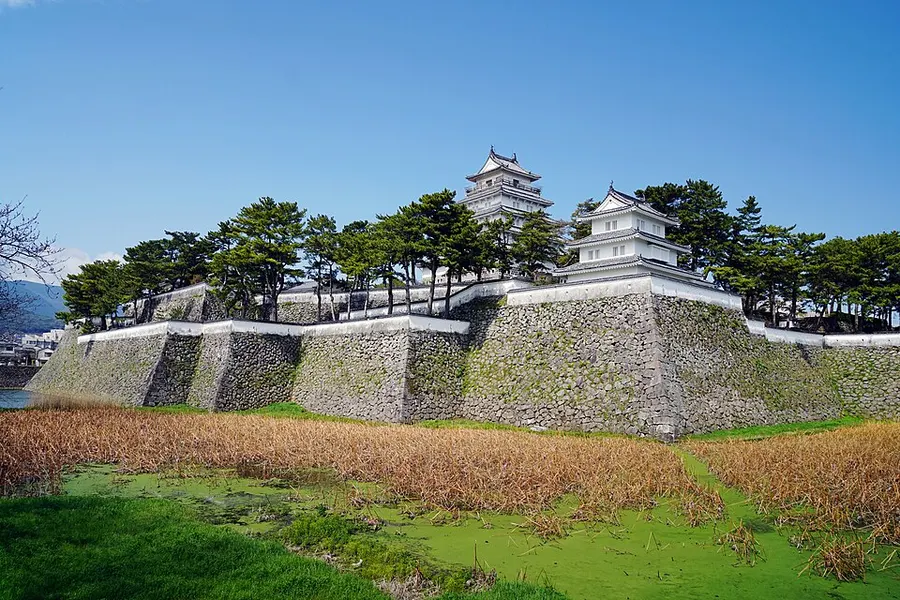
Upon his arrival, Matsukura’s first priority was to build a grand castle. By raising taxes and forcing the populace to help with construction, he ended up with a castle that was far bigger than the income from the relatively modest 40,000 koku (200,000 bushels) of rice produced annually by the Shimabara domain could justify. It took seven years to build, and once it was complete in 1625, Matsukura no longer had any reason to show restraint. He began persecuting the Christian population, first by boiling them alive in the volcanic springs at Unzen, and later by torturing them until they renounced their faith.
Shigemasa’s son Matsukura Katsuie (1598–1638) inherited the domain in 1630. He maintained his father’s policies of harsh taxation and brutal punishment, while conditions for the peasantry were made even worse by a run of poor harvests. All this misery culminated in the Shimabara Rebellion (1637–1638). In part because the castle was constructed on such a grand scale, the shogunate forces survived the attacks of the well-armed and well-led Shimabara rebels who eventually withdrew. Katsuie, however, did not survive for long. He was executed in 1638, and the castle passed through a succession of different daimyo families.
This English-language text was created by the Japan Tourism Agency.