
Takasago Shrine
高砂神社
Culture · Takasago · Hyogo · Japan

About this place
The all-night light, later relocated, now stands within the grounds of Takasago Shrine, and people pray there for safe passage on their travels.
This stone lantern was made in 1799. It originally faced the shore of the Harima Sea, in the eastern part of the Seto Inland Sea, serving as a lighthouse for passing vessels. The town thus developed as a popular port, an important trading post, and a relay station for the region. The all-night light, later relocated, now stands within the grounds of Takasago Shrine, and people pray there for safe passage on their travels.
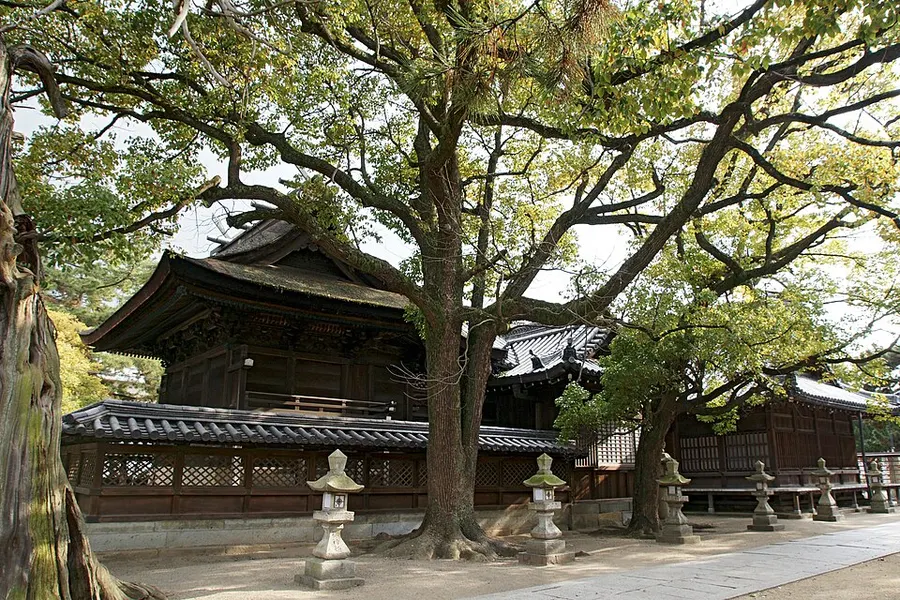
The shrine, a symbol of Takasago, was first built near the shore about 1,700 years ago. It is thought that the sandy beaches and pine trees made the location attractive. Later, the shrine was relocated in order to allow a castle to be built to defend the city, and eventually was moved again to its current position. The fierce-faced tiles on the roof of the main building are believed to scare away bad spirits, protect people at sea, and even bring good luck to those in love.
This Noh stage was built in 2013 as the location is thought to be the original setting of the Noh play Takasago. The play was written by actor and playwright Zeami Motokiyo (1363–1443), who is considered the foremost composer of the traditional Japanese performing art of Noh, a UNESCO Intangible Cultural Heritage. During the play, a singer chants: “From Takasago, sailing over the bay, sailing over the bay, the moon goes out with the tide, past the silhouette of Awaji Island, far over the sea to Naruo, arriving at Suminoe, arriving at Suminoe.” The chant, which refers to several places in present-day Hyogo and Osaka Prefectures, evokes images associated with harmony between husband and wife.
This English-language text was created by the Japan Tourism Agency.