
The flower fields of central Hokkaido
Hokkaido · 4 days · Balanced pace · Outdoors · Food · Art
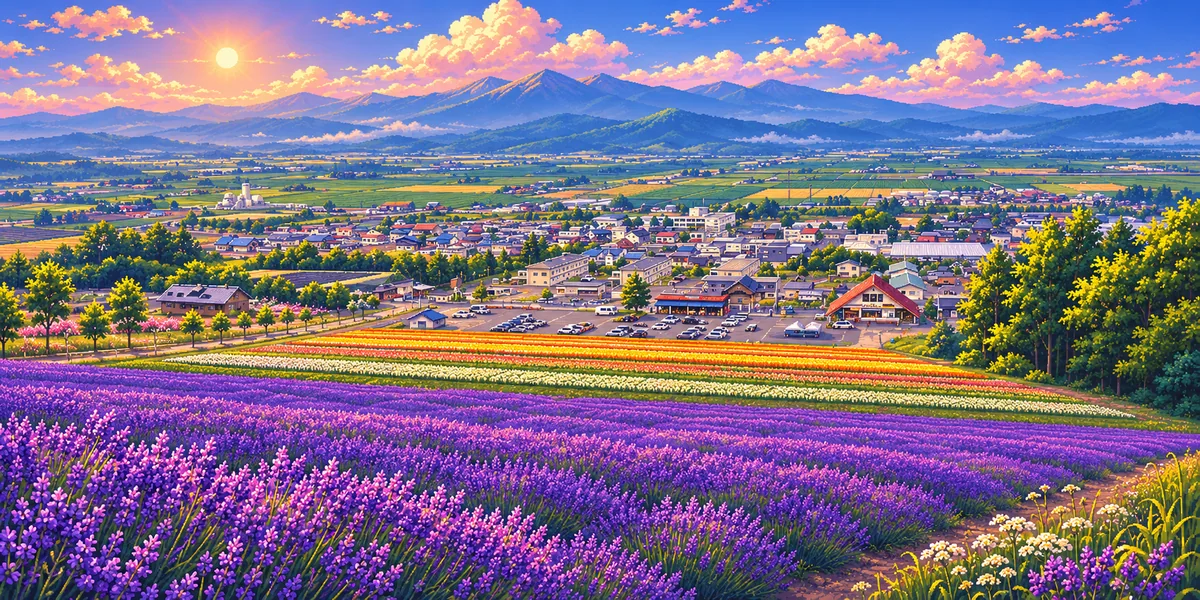
Use Asahikawa as a rail base for Biei’s Blue Pond and Nakafurano’s summer fields. Look for lavender in July, then follow the later flower beds in August.
Trip bases
- Asahikawa · Days 1–4
Estimated trip cost
¥39,200–¥88,500 per person, including accommodation, meals, local transport, activities & entry, between cities. Budget separately for getting to the first stop, traveling home, shopping and personal spending.
- Accommodation
- ¥19,500–¥43,500
- Meals
- ¥11,600–¥22,800
- Local transport
- ¥2,400–¥9,200
- Activities & entry
- ¥1,200–¥6,000
- Between cities
- ¥4,500–¥7,000
Day by day
Day 1 · Ramen and the woodworking city
Asahikawa
- Morning
- Leave your bags by Asahikawa Station and start along Kaimono Koen, the pedestrian shopping street. Try a bowl of the city’s shoyu ramen for lunch.
- Afternoon
- Ride a bus to Asahikawa Design Center to see the work of regional furniture makers. Compare how chairs and tables are joined, then look for smaller wood pieces in the shop.
- Evening
- Eat grilled Hokkaido vegetables and fish downtown. Find the Furano Line departure boards and choose tomorrow’s train and connecting bus.
- Getting there
- The Design Center is outside downtown. Take a Dohoku bus to Nagayama 2-jo 10-chome and check the return departure before exploring.
Day 2 · Biei’s blue water and farm produce
Asahikawa
- Morning
- Ride to Biei and visit the tourist information office by the station. Take the Dohoku route bus toward Shirogane and follow the viewing path around the Blue Pond.
- Afternoon
- Return to Biei for a lunch of locally grown vegetables, potatoes or corn when in season. Explore the small town center before your train, keeping fields and farm tracks private.
- Evening
- Back in Asahikawa, choose a neighborhood izakaya for a small plate of potatoes with butter and a grilled fish special.
- Getting there
- Asahikawa ↔ Biei by JR. The pond needs a separate bus or taxi from Biei. Choose your return bus ahead of time because departures are spaced out.
Day 3 · The flower slopes of Nakafurano
Asahikawa
- Morning
- Take the Furano Line to Nakafurano for Farm Tomita. Begin with the Sakiwai lavender field in July, or ask staff which colorful annual beds are at their best in August.
- Afternoon
- Pause for melon or soft serve, then walk one more loop through the fields. If the timetable leaves room, visit the town’s Hokuseiyama flower slopes on the way back to Nakafurano Station.
- Evening
- Return to Asahikawa for dinner. Buy something for the train in town if the gaps between return services make this a late ride.
- Getting there
- From regular Nakafurano Station allow about 25 minutes on foot to the farm, or arrange a taxi. Use the seasonal stop only after checking that both your trains serve it.
Day 4 · A final morning at Asahiyama Zoo
Asahikawa
- Morning
- Leave luggage at the hotel. With a later departure, catch the bus to Asahiyama Zoo and pick a few exhibits, starting with the animals your group most wants to see.
- Afternoon
- Allow time for the return bus and a simple lunch near the station. With an early train or flight, skip the zoo and have breakfast and a riverside walk downtown.
- Evening
- Depart from Asahikawa. Take a station bento for a long train ride or a light meal in town before a late airport transfer.
- Getting there
- The zoo is outside the city center. Check both bus times on arrival and build the outward airport or rail connection around a firm departure.
Before you go
- Arrival & departure
- Arrive by rail or airport bus and stay three nights near Asahikawa Station. This budget starts and ends in Asahikawa and covers the Biei and Furano Line outings. Add the journey from Sapporo or the airport if needed.
- What to book
- Check the regular Furano Line timetable and book rural taxis ahead. Use Lavender-Farm Station only if that day’s published train actually stops there. JR announced that 2026 was the final year of the Norokko train, so later summers need that year’s timetable.
- Best months
- July, August
- When to go
- Early to mid-July is usually best for Farm Tomita’s lavender. By August much of it has been cut, but the annual flower beds offer a different palette. Use the farm’s field diary for your exact dates in June, August or September.
- Weather alternatives
- When a rural bus is disrupted, spend the day with the furniture and woodwork at Asahikawa Design Center, checking its opening calendar. Move the flower day to the clearest forecast. After heavy rain, the pond’s color can be muted.
- Traveling together
- For a party of five or six, prearrange a larger taxi or two cars for the rural last mile. Bring water and hats for the exposed flower slopes. Agree on a meeting spot by the farm entrance before splitting up.