
Kyushu from pottery towns to volcanic shores
Fukuoka, Saga, Nagasaki, Kumamoto & Kagoshima · 18 days · Balanced pace · Food · Culture · Outdoors · Shopping · Art
Trace a porcelain cup back to Arita, take the little railway down the Shimabara Peninsula and cross the Ariake Sea by ferry. Rice fields, volcanic grassland and a morning at Ibusuki’s sand baths fit between stays in six towns and cities.
Trip bases
- Fukuoka · Days 1–3
- Takeo · Days 4–6
- Nagasaki · Days 7–9
- Shimabara · Day 10
- Kumamoto · Days 11–13
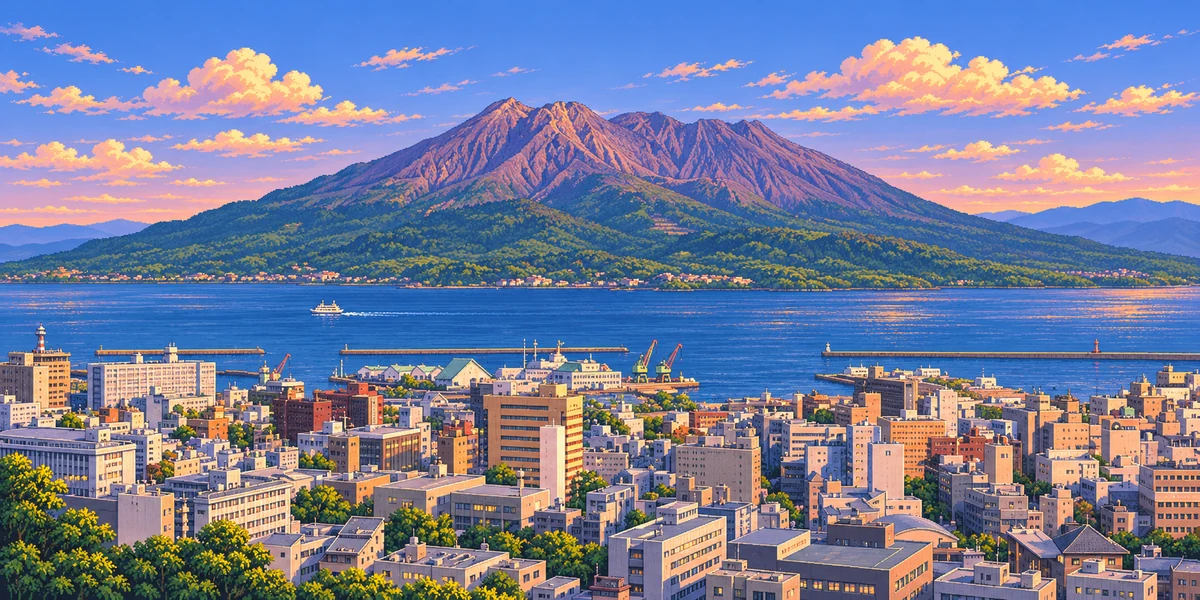
- Kagoshima · Days 14–18
Estimated trip cost
¥231,600–¥526,900 per person, including accommodation, meals, local transport, activities & entry, between cities. Budget separately for getting to the first stop, traveling home, shopping and personal spending.
- Accommodation
- ¥115,600–¥280,500
- Meals
- ¥57,600–¥126,000
- Local transport
- ¥12,600–¥32,400
- Activities & entry
- ¥10,800–¥36,000
- Between cities
- ¥35,000–¥52,000
Day by day
Day 1 · Hakata’s woven cloth and noodle counters
Fukuoka
- Morning
- Drop luggage at your hotel and start around Kushida Shrine. Compare the geometric patterns of Hakata-ori textiles in the shops along Kawabata Shopping Arcade.
- Afternoon
- Walk from the arcade to the river at Nakasu. Pick a tonkotsu ramen counter for lunch and learn how to order a second portion of noodles during a quiet hour.
- Evening
- Look for a yatai with room for your party along the river. For a tired group, choose a table indoors and try grilled chicken skewers or a small plate of mentaiko.
- Getting there
- The subway links the airport’s domestic terminal to Hakata. From an international arrival, use the terminal shuttle or a bus toward town as appropriate.
Day 2 · The shrine approach at Dazaifu
Fukuoka
- Morning
- Walk up to Dazaifu Tenmangu past shops grilling umegae mochi, rice cakes stamped with a plum blossom. Pause at the ponds before reaching the main precinct.
- Afternoon
- Follow the signed approach to the Kyushu National Museum. Pick a gallery tracing exchange with the Asian mainland. On a closing day, take a longer lunch in town and wander the side streets off the shrine approach.
- Evening
- Back in Tenjin, browse the department-store food halls for local tea or packaged mentaiko. Sit down to dinner before returning to Hakata.
- Getting there
- Ride Nishitetsu from Fukuoka (Tenjin) and change at Nishitetsu Futsukaichi for Dazaifu. Use the same interchange on the return.
Day 3 · Yanagawa by pole boat
Fukuoka
- Morning
- Take a morning train to Nishitetsu Yanagawa. Choose a canal operator and find where its boat ride finishes before boarding a shallow punt.
- Afternoon
- Eat seiro-mushi, eel steamed with rice, near the old canal district. Walk through the lanes at the landing or visit the garden at Ohana if it is open that day.
- Evening
- Return to Fukuoka for dinner or a final walk through Tenjin. Pick up snacks for the train into Saga Prefecture.
- Getting there
- Use the Nishitetsu Tenjin–Omuta Line. Your boat can end far from the boarding point, so check its return shuttle or use a local bus to the station.
Day 4 · Through the vermilion gate of Takeo Onsen
Takeo
- Morning
- Take the limited express from Hakata to Takeo-Onsen. Leave your bags in town before walking to the Romon gate of the old hot-spring complex.
- Afternoon
- Visit the bathhouse area and choose an available public bath. Break for a late lunch so everyone has time to settle in before an inn dinner.
- Evening
- Walk back past the illuminated gate after eating. If a ryokan includes dinner or breakfast, deduct those meals when comparing the room quote with your budget.
- Getting there
- Ride a Hakata–Takeo-Onsen limited express. Stay near the bathhouse district or the station and ask your accommodation about its luggage or pickup arrangements.
Day 5 · Arita from cobalt pigment to porcelain cup
Takeo
- Morning
- Start at the Kyushu Ceramic Museum near Arita Station. Compare blue-and-white wares with brightly colored export porcelain before going into the old pottery town.
- Afternoon
- Browse the streets around Kami-Arita and visit Tozan Shrine to see its porcelain torii. In a tableware shop, compare a bowl’s painted surface and unglazed foot before choosing a piece to take home.
- Evening
- Ask the seller to wrap any ceramics for rail travel. Return to Takeo for a bath and a casual dinner.
- Getting there
- Use the JR Sasebo Line between Takeo-Onsen and Arita. Local trains also serve Kami-Arita. Check the stops on your return train or take a taxi back to Arita Station.
Day 6 · A pond beneath Mount Mifune
Takeo
- Morning
- Visit Mifuneyama Rakuen and follow the paths around the pond. In spring, look for banks of azaleas. In autumn, the maples near the water are a good place to linger.
- Afternoon
- Pass through Takeo Shrine’s bamboo approach to see its old camphor tree, then stop for tea. If it is wet or you have children keen on science, spend this part of the day at the Saga Prefectural Space and Science Museum.
- Evening
- Choose a second bathhouse or book a quiet dinner close to your inn. Leave tomorrow morning clear for the train to Nagasaki.
- Getting there
- Use a local bus or short taxi ride to the garden, confirming the return before you start. The space museum has a separate location and needs its own transfer.
Day 7 · Harbor houses above the tram tracks
Nagasaki
- Morning
- Board the Nishi Kyushu Shinkansen for Nagasaki. Leave luggage by the station or tram line, then travel to the southern hillside above the port.
- Afternoon
- Visit Oura Cathedral and the neighboring Glover Garden. Take the garden’s higher entrance if the lift route is available and work downhill through the former merchant residences.
- Evening
- Choose champon, a noodle soup with seafood and vegetables, in Shinchi Chinatown. Finish with a short walk beside the water rather than another hill.
- Getting there
- Takeo-Onsen → Nagasaki on the Kamome. Use trams to the Oura district and check which stop suits your chosen garden entrance.
Day 8 · A day in Urakami
Nagasaki
- Morning
- Give the Nagasaki Atomic Bomb Museum an unhurried visit. Take a break between the historical accounts and the nearby National Peace Memorial Hall.
- Afternoon
- Walk through the hypocenter park and sit quietly at Peace Park. Leave the rest of the afternoon open, especially with children or anyone who would prefer a shorter visit.
- Evening
- Return to the central area for dinner. Choose a neighborhood restaurant near your hotel for an easy end to the day.
- Getting there
- Take a tram to the northern museum and park area. The museum, memorial hall and parks have separate entrances on different levels.
Day 9 · Dejima’s trading rooms and the stone bridges
Nagasaki
- Morning
- Step inside Dejima’s reconstructed trading post. Follow imported goods and merchants’ personal possessions through the warehouses and residences.
- Afternoon
- Walk by Megane Bridge and look for its reflection between the arches. Follow the river to a castella shop and compare a slice with the sponge cakes sold elsewhere in the city.
- Evening
- If the sky is clear, visit the waterfront at sunset. Collect any luggage you intend to forward before the hotel’s cutoff and keep an overnight bag for Shimabara.
- Getting there
- Use the tram for Dejima and walk the compact central river district. Allow extra time to reach Nagasaki Station in the morning.
Day 10 · The little railway down the peninsula
Shimabara
- Morning
- Ride to Isahaya, then board the Shimabara Railway. Keep the windowside part of the trip free to watch the fields and Ariake Sea.
- Afternoon
- Get off at Shimabara Station for the castle. Visit the exhibits, then explore the samurai district and its narrow water channels before checking in.
- Evening
- Try guzoni, Shimabara’s mochi and vegetable soup. Check tomorrow’s ferry and the bus out of Kumamoto Port while you still have time to select another sailing.
- Getting there
- Nagasaki → Isahaya by JR, then use a separate Shimabara Railway ticket. Shimabara Station serves the castle. Shimabarako Station is the ferry-side stop.
Day 11 · Across the Ariake Sea to a spring-fed garden
Kumamoto
- Morning
- Choose a morning sailing to Kumamoto Port. From the deck, look back toward the mountains of the Shimabara Peninsula, then make the bus connection into Kumamoto.
- Afternoon
- After dropping bags, follow the path around Suizenji Jojuen’s spring-fed pond. Find the small landscaped hill shaped like Mount Fuji and visit Izumi Shrine inside the grounds.
- Evening
- Take a tram downtown and eat Kumamoto ramen with roasted garlic. For a shorter day, save the garden for tomorrow and have dinner near your hotel.
- Getting there
- Reach Shimabara Port from town by rail or taxi. Kyusho Ferry takes about an hour. Check the connecting bus to Kumamoto Station or Sakuramachi before picking a boat.
Day 12 · Inside the stone defenses of Kumamoto Castle
Kumamoto
- Morning
- Use the castle’s visitor route to see the repaired main keep and the stone walls still being restored after the earthquakes. Start early enough to read the reconstruction displays.
- Afternoon
- Have lunch at Sakuranobaba Josaien below the castle. Compare local mustard-filled lotus root and small ikinari dango, then spend the afternoon in the covered shopping arcades.
- Evening
- Pick up a bento or breakfast snacks for Aso. Confirm the train and bus pair in each direction before committing to the mountain outing.
- Getting there
- Use a central tram stop for the castle district and follow the day’s signed entry route. Keep the second half of the day close to the hotel for laundry or rest.
Day 13 · Grassland inside the Aso caldera
Kumamoto
- Morning
- Take an early train to Aso and change to a mountain bus for Kusasenri. From the grassland edge, look across the broad basin toward the cones when visibility allows.
- Afternoon
- Explore the Aso Volcano Museum by the bus stop and leave enough time for the downhill service. At Aso Station, browse the roadside market for local dairy products before your train.
- Evening
- Return to Kumamoto for dinner. This is the last night before a longer southern stay, so keep the evening flexible if train or bus times change.
- Getting there
- Use JR’s Hohi route to Aso, then the bus to Kusasenri. Check volcanic advisories, operating trains and the last downhill bus. This outing stays around the grassland and museum.
Day 14 · South by Shinkansen to Kinkowan Bay
Kagoshima
- Morning
- Take a southbound Kyushu Shinkansen to Kagoshima-Chuo, leave your bags and have lunch near the station. Try satsuma-age fish cakes with several different fillings.
- Afternoon
- Visit the Museum of the Meiji Restoration by the Kotsuki River. Follow the riverside paths through Kajiyacho to see how the city introduces its nineteenth-century history.
- Evening
- Have black pork shabu-shabu in Tenmonkan or choose a smaller set meal. Save the next morning’s ferry information and the departure point on your phone.
- Getting there
- Kumamoto → Kagoshima-Chuo by Kyushu Shinkansen. Kagoshima-Chuo is the Shinkansen terminal. City trams connect the station and Tenmonkan.
Day 15 · Cross the bay to Sakurajima’s lava shore
Kagoshima
- Morning
- Take the municipal ferry and begin at the Sakurajima Visitor Center. Read the current volcano and access information before choosing a walk near the port.
- Afternoon
- Walk part of the Nagisa Lava Trail and pause by the footbath overlooking the bay. Pack a small towel and check return buses before adding a more distant viewpoint.
- Evening
- Take the ferry home as the light changes over the city. In high winds or heavy ashfall, stay on the mainland and move this crossing to the spare city day.
- Getting there
- Go to the Sakurajima ferry terminal at Kagoshima Port. The crossing takes roughly 15 minutes. The visitor center and the start of the trail are within walking distance of the island terminal.
Day 16 · A sand bath on the Ibusuki shore
Kagoshima
- Morning
- Ride down the Satsuma Peninsula to Ibusuki. At Saraku, check the reception window and follow staff instructions for the bath beside the sea.
- Afternoon
- Leave time for a shower, a slow lunch and a short seafront walk. If the baths are closed or anyone would rather sit this one out, make it a coastal lunch outing or move the trip to tomorrow.
- Evening
- Return by train before dinner. Try chicken rice or another southern Kyushu dish, then leave the rest of the night free after the heat of the baths.
- Getting there
- JR connects Kagoshima-Chuo and Ibusuki. Reserve seats if you want the Ibusuki no Tamatebako sightseeing train. Allow a walk or short taxi ride between Ibusuki Station and Saraku.
Day 17 · Borrowed scenery in the Shimazu garden
Kagoshima
- Morning
- Visit Sengan-en for its view across the water to Sakurajima. Walk from the former residence into the garden, stopping where the mountain appears above the trees.
- Afternoon
- Visit the Shoko Shuseikan Museum to see the Shimazu family’s industrial experiments. Look for Satsuma kiriko cut glass nearby and compare its layered colors in daylight.
- Evening
- Pick up tea or a boxed sweet in town. Keep a final restaurant booking flexible until you know whether any ferry or rail outing needs to move to today.
- Getting there
- Use a local train stopping at Sengan-en Station or a city sightseeing bus. Check return service to central Kagoshima before entering the estate.
Day 18 · Tea and a last view of the bay
Kagoshima
- Morning
- Take a short waterfront stroll or have a slow breakfast near Kagoshima-Chuo. Leave your bags at your hotel while collecting any last gifts.
- Afternoon
- At the station shops, compare mainland Kagoshima tea with roasted sweet-potato sweets. Choose a bento for an onward train or board the airport bus with time to spare.
- Evening
- Depart southern Kyushu. An early flight works by going directly from the hotel to the airport bus stop and doing the shopping on day seventeen.
- Getting there
- Use Kagoshima-Chuo for Shinkansen departures. Kagoshima Airport is outside the city and requires a separate road transfer. Allow for traffic on flight days.
Before you go
- Arrival & departure
- Begin at Fukuoka Airport or Hakata Station. Finish at Kagoshima-Chuo for onward trains or take an airport bus for a flight from Kagoshima. The return journey to Fukuoka and international flights sit outside the route budget.
- What to book
- Book lodging in Takeo and Shimabara before choosing your long train legs. Check museum calendars, both sides of the Shimabara ferry transfer and JR seat availability for Aso or Ibusuki. Allow separately for ceramics you buy and any premium ryokan dinner above your meals estimate.
- Best months
- March, April, May, October, November
- When to go
- March to May and October to November suit the canal and garden walks. Take an extra layer for the Aso grasslands. Around Golden Week, the Arita pottery fair can change shop hours, station crowds and room availability.
- Weather alternatives
- Use the Kyushu Ceramic Museum on a wet Takeo day and swap the garden to the next one. In Kumamoto, trade Aso for the city day if cloud, service alerts or volcanic restrictions disrupt access. The southern rail and ferry days can also trade places within the Kagoshima stay.
- Traveling together
- Stay three nights each in Fukuoka, Takeo and Nagasaki, one in Shimabara, three in Kumamoto and four in Kagoshima. Families can split between the Takeo garden and the space museum. A small overnight bag is useful if you forward larger luggage from Nagasaki to Kumamoto.
Official visitor information
- Nishitetsu · trains to Dazaifu and Yanagawa
- JR Kyushu · Hakata to Takeo and onward to Nagasaki
- Arita tourism · porcelain walks and kiln visits
- Kyushu Ceramic Museum · opening days
- Shimabara tourism · rail and port connections
- Kyusho Ferry · Shimabara–Kumamoto timetable
- Aso tourism · rail, bus and current visitor notices
- Kagoshima City · Sakurajima ferry access
- Saraku · sand-bath calendar in Ibusuki